Trees in bloom

Crabapple blossoms

The trees were all in flower when I was at my parents’ last week. Some trees have already flowered and finished, such as the cherry, but most of the trees were just at their peak, or on the downside of flowering but with plenty of blossoms left. I enjoy the flowering trees, and it’s a shame that their blooming period can’t last longer. However, I suppose it makes it that much more enjoyable while they do.

One of my favourites for its gaudiness is the crabapple. The tree in my parents’ backyard must be getting on in years as I can always remember it being there. Yet it continues to put on a good show in the spring. The tree’s proximity to the birdfeeders means it’s usually full of birds of different sorts, and in the spring the contrast of an Indigo Bunting or Blue Jay among the fuchsia flowers is particularly eyecatching.

The flowering trees that we typically think of are all fruit trees of one variety or another. Although many trees “flower”, the ones that produce these large, colourful flowers do so in order to attract polinators. Once the flowers are pollinated they set seed and develop fleshy fruits to attract animals, their primary seed-dispersal method. Other trees with less showy flowers usually develop seed pods or cases. This isn’t an exclusive relationship, however, as there are trees with large flowers that produce seed pods, and fruit-bearing trees that don’t put on gaudy shows like this.

Apple blossoms

The flowering tree that most people probably think of in the spring is the apple. There are several apple trees on my parents’ property, and all of them are also quite old, by fruit tree standards. Having never been pruned, they’re large, magnificent trees, which flower beautifully in the spring but don’t produce a lot of fruit. The apples they do grow tend to be small and usually slightly bitter; not so appealing to people, but the horses still love them.

The apple blossoms have a single style, the female reproductive organ, in the centre of the flower, surrounded by many anthers. Each flower blossom produces a single fruit once pollinated.

Hawthorn blossoms

Although superficially similar in appearance, the hawthorn’s white flowers can fairly easily be told from those of the apple tree. They have many styles in the centre of each flower, each of which, when pollinated, produces a seed. The flowers also grow in “corymbs”, or groups, and the hawthorn fruits (called, appropriately, “haws”) form in clusters as a result.

Hawthorns are generally known for the long, sharp thorns they produce, but their flowers can be just as memorable. The hawthorn trees my parents have are also very large, having grown in the open, unobstructed by other foliage.

Chokecherry blossoms

In the winter I clipped the infected branches from the chokecherry bearing Black Knot, and this spring it’s been blooming prolifically. Unlike the domesticated cherry, both chokecherry and black cherry produce flowers (and subsequently fruit) in long racemes. As a kid I liked to pick the stems of ripe fruit and slide my finger down it to collect a handful of berries; what happened to the berries after was less important, it was the satisfying way they popped off the stem that appealed to me.

Lilac blossoms

This last one isn’t really a tree but a very large shrub, lacking a clear main trunk. The lilac is one of those that doesn’t produce fruit, but instead develops clusters of small seed pods. Like the others, the lilacs near my parents’ house have grown quite large, and over the years have produced fewer blossoms. They remain my favourites, though. I absolutely love the intoxicating smell of the clusters of flowers, and am sad when they finish blooming each spring. Someday, when I own my own house, there will be a large lilac bush planted at the corner.

Leaves of three

Poison Ivy

I made a second visit to the site I’m surveying for the City a few days ago. The place was quite active with birds, including a few promising migrants that I hope stick around. The area I’m surveying is primarily open meadow that’s being encouraged to succeed into forest (obviously some decades from now, since the trees being planted are mostly just little seedlings). It’s surrounded by some relatively narrow bands of mature deciduous forest that separate the meadow from the nearby rail lines and road. However, there’s enough remnant forest there to support forest species, including the migrant Wood Thrushes and Ovenbird I heard singing from it.

Since I don’t really venture into the forest during the survey, once I’m done, before I leave, I made a quick foray to poke around. I spotted a few wildflowers I think of as “deep forest” species, stuff that you don’t see outside of the forest interior, including a couple favourites of mine like Bloodroot. And, I spotted this stuff. Poison Ivy. A favourite of hikers everywhere, who often take home more than just fond memories.

Poison Ivy

I’ve seen some nasty reactions to Poison Ivy, so I was careful to not step off the trail. The culprit causing the ugly rashes is a chemical called urushiol. It’s an oil, found in plants of the family Anacardiaceae. The most problematic genus is Toxicodendron, which includes the dreaded three Poison plants: Ivy (T. radicans), Oak (T. pubescens), and Sumac (T. vernix), the latter being considered by some to be the most toxic plant in the US. Fortunately for me, neither of the latter two occur in my area of Ontario (Poison Sumac does occur in Ontario, but it’s either restricted to the more southern Carolinian forest regions, or it’s local in occurrence and I’ve never encountered it).

Urushiol is an organic chemical with two forms, one saturated and one unsaturated, much like the fatty acids we pay attention to in food. The term “saturated” means that every carbon atom in the molecule has the maximum number of additional atoms attached to it that it can carry. A single carbon atom can make four bonds – some of these may be to other carbon, oxygen, or other atoms, but the rest will be filled with hydrogen. Unsaturated means that the bond between some of the carbon atoms is doubled (they’ve ditched – or never had – the extra hydrogen atoms and instead bonded with each other. Awww…).

Unfortunately, these double bonds can be unstable, and the unsaturated urushiol molecules are the ones that cause the more severe reactions because of the way they’ll interact with our own body molecules. The more unsaturated the molecule, the greater the reaction. A plant’s particular urushiol composition varies from species to species, with the species that cause the worst reactions, such as Poison Sumac, containing the greatest proportion of unsaturated molecules. Less than 50% of people react to saturated urushiol by itself, but over 90% will react to molecules with at least two double bonds.

Poison Ivy

Poison Ivy has a milder composition of urushiol, such that there are some people who don’t react to the oils. Variably between 15% and 30% of people may not react when exposed to Poison Ivy. I happen to be one of the lucky folks in this segment of the population, as are Blackburnian and my mother. People with hyperactive immune systems can have very severe reactions. An earlier boyfriend of mine fell into this category, and I usually found myself taking care of his clothing for him after he’d had an unfortunate run-in. He could probably have broken out in a rash just by looking at the plant. More sensitive people may find that they react also to other species in the Anacardiaceae family, including mangos (which have urushiol in their skin) or cashews (which have it in the shell).

Unfortunately, just because you’ve not reacted in the past doesn’t mean you’re scot-free. People who are repeatedly exposed to the compound may begin to develop a sensitivity to it, or may find that other plants with stronger urushiol compositions may trigger a reaction. Therefore I don’t intentionally go prancing through the stuff, just to be safe, although I’m usually the person to venture in if it’s unavoidable. Interestingly, the same thing works the other way, too – some people who have reacted in the past may lose sensitivity to it.

Poison Ivy

Not all animals are bothered by this oil. Birds, for instance, show no adverse effect from exposure, and will happily gobble down the white berries the plant produces in the fall. Pets who run through patches of the stuff will carry the oils back on their fur, which is unfortunate for the owner who unsuspectingly then pets the animal, but does the animal itself no harm. In fact, grazers could eat the plant and not become sick from it. Since the oils are not just present in the leaves, but also in the roots such that pulling it up by hand even in the winter will still give you a reaction, perhaps getting a goat as an organic means of control might be a solution…

So what do you do once you’ve had a run-in with the stuff? Well, for one, avoid hot water which will open your skin’s pores and allow the chemical to sink deeper. It’s an oil, but does dissolve in water (barely), so washing with lots of cold water may help, but will take a while. Using soaps with the water is preferable, to help break up the oil the same way you’d clean your greasy dishes. It’s partially dissolvable in alcohol, which may be another solution. There are some home remedies, too, including the sap from the plant Jewelweed – useful if you find yourself in the bush with no easy access to other options. If you’re not fortunate enough to notice it or be able to do something in time, without treatment the rash will last 3-4 weeks, but will eventually go away on its own. Various creams and salves are available that will soothe the itching and speed up the healing.

Poison Ivy

Obviously the best solution is just to avoid it in the first place. There’s a rhyme to help you remember – “Leaves of three, leave it be”. I’ve heard tagged on to this, “Leaves of four, have some more”, though this may have been made up by kids as I don’t know if it even references anything. Wikipedia also suggests second-halves of “Berries white, danger in sight”, referring to the white berries of fall, or “hairy vine, no friend of mine”, in reference to the little root hairs that secure the climbing version of the species to a tree trunk or other substrate.

In fact, the three-leaves thing by itself is not useful for identifying the plant (although you’ll be sure to stay away from anything with three leaves, which happens to include Poison Ivy), as there are other species that also have three leaves. I was taught that the three leaves of Poison Ivy droop, rather than being held erect, and that the plant has red stems, but in recent years I’ve begun to wonder about the broad applicability of those statements, and I can find no mention of them on websites.

The main features are the three leaves, the branches for which come off the main stem in an alternating pattern (rather than opposite each other), and that the stem has no thorns (I’m not sure what species does have thorns that it might be confused with). Other look-alikes will either have opposite leaves, or will not be uniformly three-leaved. Poison Ivy is usually bright green in the summer, but can be reddish in the spring and fall. There are two forms, a ground plant and a vine, which are variously lumped into one species or split into two, depending on your source. The ground form can grow as high as waist-height, if conditions are good, and also depending on the particular subspecies.

Poison Ivy

There are two species of Poison Ivy, an eastern and a western, and between the two they’re found across the continent. The only places to be free of it are Newfoundland, Alaska, California and surrounding area, and northern Canada. The species is more common now than it was historically. It likes forest edges and clearings where it can get a bit more light, and development has helped to create more of this habitat.

Also, a recent study apparently indicates that climate change is having an effect on the plant. The increased levels of CO2 in the atmosphere encourage greater plant growth, with larger leaves, as well as higher urushiol production.

Poison Ivy

You really have to wonder why a plant would go to the trouble of producing a compound that hardly anything reacts to. And also why most animals don’t react, but humans can react so violently. The plants weren’t talking, though, so it remains a mystery.

A side of mustard

Trail

Last year, a new trail system was installed down at the research station. For the first few years the trails we used were just a network of well-worn dirt tracks, tramped down by many feet over many years, in most spots only a single person wide. As part of a park accessibility plan, a new crushed-gravel trail was put in place over the primary dirt ones. The idea is that it’s a wheelchair-accessible substrate, that will allow handicapped park visitors to come see other areas of the park. I think it’s also intended to help better define the trail system to encourage folks to hopefully not wander into the bushes.

Trail construction

When they first installed the trail they had to bulldoze a car-sized wide gouge out along where the new trail was to go. This is a heavy-duty, permanent trail that went in, with a full gravel bed laid down first over which the crushed gravel was placed and packed. As well, an earth bridge with a culvert was placed over the small slough that runs along the peninsula’s length, to connect one side of the trail to the other. The bulldozed section had to be wide enough to accommodate the backhoe and trucks that were bringing in the materials and gravel. It was quite a scene down there for a while while they were working. The final trail was only intended to be about half the width of a dump truck, so after the crushed gravel went down, the sides had to be filled in. Because the area is mostly sand, sand was also used to edge the trail off.

Field Pennycress sprouting

However, at some point late in the summer there was a mixup, and one section was edged with topsoil. It was later corrected and sand put down, but some of the topsoil remained under the sand. It didn’t take long for us to start seeing small sprouts peeking through the sand. I couldn’t tell what they were at the time, but they seemed to be hardy, whatever they were. They grew into small rosettes of leaves that got covered up with snow in the winter. When it melted back they were still there and still green, and I was intrigued to see what they became. As they grew, the winter rosette gradually yellowed and died back and new foliage replaced it.

Field Pennycress and mustard

When they were about six inches tall they started blooming, and I thought they’d reached their finished height. But they continued growing, and some are now over a foot and a half tall. They create a pleasant spray of white-on-green through this section of the trail, and although I knew they must be considered invasive weeds to have sprouted so enthusiastically from some scrapes of topsoil, I can’t help but like the way they look lining the trail.

I took some photos today while I was down there, and using the online wildflower identification key that Jennifer at A Passion For Nature posted about recently, I attempted to figure out what they were. Although my assessment of the size of the flowers was off I did end up finding out what they are. In the above photo you can see two types. The white ones are called Field Pennycress (Thlaspi arvense), and the yellow ones are Yellow Rocket aka Winter Cress (Barbarea vulgaris).

Mustard

As I suspected, both are introduced species to North America. They’re both originally native to Europe, and could’ve either been escapees from cultivated gardens, or accidentally introduced in cargo shipments, but probably the former – I found no mention of believed release site or information in the bit of searching I did, but did find something that suggested early settlers to North America used the Yellow Rocket to prevent scurvy.

They’re also both members of the mustard family, Brassicaceae. I think of mustards as being these light yellow flowers, similar to Yellow Rocket, but in fact it’s a very broad, widely-encompassing family that includes such well-known plants as cabbage, cauliflower, turnip and radish, as well as garden flowers such as Alyssum and wallflowers.

Field Pennycress

All members of the mustard family have four-petaled flowers. In the case of the Field Pennycress, the flowers were all somewhat flattened, making it hard to see inside them. For both species, the flowers grew along long stalks, which continued growing from the tip as more flowers were produced. You can get an idea of that here, with the center containing many buds that have yet to develop and the outer flowers growing from different points along the stem.

Field Pennycress

As the pennycress flowers mature, they begin to form seed pods, and the older flower stems, further down the stalk, support broad, flat, disc-like pods. The plant is capable of self-pollination, so doesn’t require other plants to develop fertile seeds – even though that hardly seemed like a problem here. Once the seeds are mature, the pods brown and drop from the plant, and are blown about in the wind as their primary dispersal method, potentially as far as 1 km (about 0.6 mi) from their parent plant.

Pennycress seeds can last for a long time if buried in the soil. Depending on the depth the seed is buried, it may remain viable for as long as 30 years. I have to wonder just how old these seeds were prior to being spread out along our trail edges.

Mustard

The Yellow Rocket didn’t seem to be forming seeds yet, but does so and spreads them in a similar manner. Both species are inhabitants of disturbed sites such as roadsides, ditches, so-called “waste” areas, and agricultural fields. They prefer slightly moist soil, but will evidently grow in a variety of soil types, with varying degrees of vigour. Apparently disturbance is a key factor, and neither will grow very well in more high-quality habitats, so while they’re non-native, they’re not particularly invasive, and don’t threaten to run rampant over native species the way some introductions do.

Although the foliage of these plants is apparently edible (stated by a few sites, but also shown by its use as a scurvy-preventative), I didn’t feel tempted to try it. The leaves are apparently quite bitter except when young, and one site noted that the milk from cows that have been feeding on pennycress has a distinctly “off” flavour (this is probably only noticable in small-batch or family-scale milking operations, though).

Yellow Rocket

I’m glad to learn that, although they’re certainly robust, they’re not aggressive species. It allows my mind to rest easier while I’m enjoying them at the trailsides. I know some people take offense to introduced species simply because they’re non-native, but I’m of more a live-and-let-live mindset – if they’re not taking over the place, let’s just leave them be and enjoy them.

Morel of the understory

Morel

When I was down at the station on Thursday, I happened to spot a mushroom growing at the side of one of the trails. It’s a morel, a mushroom of the genus Morchella. Morels are one of the most distinctive of the mushrooms. They look a bit like crumpled sponges, with honeycomb-like creases and folds in the cap. They come in four identifiable varieties, that roughly correspond to species: yellow, gray, black, and “spike”, the latter having an exaggerated stem and reduced cap. The ones we have at the station are yellow morels.

Emerging morel

They’re a springtime species, coming up in late April or early May in our area, but as early as late February or early March in the far southern reaches of their range. They’re not uncommon at the site, I see them every year, usually predictably along certain trails. I just serendipitously spotted the one at trailside as I was walking through to check a net. Their colour makes them blend in with the debris that covers the ground at this time of year, but they’re fairly obvious once you spot them. They can grow to be quite large, in some instances to six or eight inches or more. Other individuals may be comparatively tiny, less than an inch. The very first one I spotted was perhaps four inches tall, but most of the rest were smaller, just two to three. Size is dictated more by the available resources the mushroom has to grow than by the species.

Group of morels

Morels tend to be associated with the east, and especially the Great Lakes region, but they can actually be found in many areas across the continent. The coastal side of the western mountain range is also a good spot to find them, but virtually every habitat, other than the dry desert habitats or the swamps of the southeast, can potentially be home to morels. Like virtually any other fungus, morels grow from a subterranean fungal root system called a mycelium. This mycelium may spread over quite a broad range of ground (I couldn’t find a number online, but one of our volunteers thought on the order of a hundred or more square metres, or over 1000 square feet), and the fruiting bodies, what we recognize as the species, can pop up at any spot within this network, where the microhabitat conditions are most ideal.

They are often associated with forest fire sites, where they grow prolifically in the first two or three years after the burn. The reason for this isn’t stated, but perhaps could simply be due to the sudden open canopy and abundance of nutrients in the soil. In non-fire areas the mushrooms can also be quite abundant, and are often associated with certain tree species, especially in the east. Old apple orchards are a good site, as are ash, sycamore, tuliptree, cottonwoods, and dead or dying elms. Cottonwoods are the primary tree species in the habitat surrounding the station, and the morels do well there. Despite these observations, morels are notoriously difficult to cultivate, especially on a large enough scale to be commercially viable, the way white mushrooms are. Most are wild-picked, and sold as delicacies.

Morel cross-section

Morels are highly edible, and in fact are a favourite among even some who aren’t so keen on mushrooms in general. Their subtle taste has been likened to mild fish (in some areas the mushrooms take the name “dryland fish” for this reason), and they’re recommended in dishes where the other flavours are likewise quiet, such as on pasta or rice. Mushrooms collected from the wild need only be lightly washed to be eaten; in fact, soaking them will ruin their flavour. However, they MUST be cooked prior to being eaten, as they do in fact contain a very small amount of toxin – it is enough to cause a reaction when raw, but is destroyed once the mushroom is cooked (although Wikipedia comments that occasionally even cooked morels, when consumed with alcohol, can sometimes cause a reaction). There are tons of recipes for morels on the web. I must admit I’m not a mushroom-eater myself (I have a thing about eating fungus), and so I’ve never personally tried them.

Although morels are generally pretty darned distinctive, there is another mushroom that can possibly be confused for them by novices. It goes by the name of false morel, for the reason that it superficially resembles the real morels. However, it is highly toxic and cannot be eaten (although the same volunteer recited a phrase he’d heard once: “All mushrooms are edible, but some can only be eaten once.”). It tends to be chunkier than true morels, and the folds in the cap more resemble the convolutions of a brain surface than the walls of a honeycomb. However, the easiest way to tell the two apart if you’re unsure is to slice off the top of the cap. True morels are hollow, while false morels are solid inside.

Double morel

Morel hunting is a popular pasttime among northeastern naturalists and fans of the mushroom as a culinary delicacy. There are morel hunting associations, morel festivals (many of which seem to take place in Michigan), morel photo groups, and morel discussion boards. They even have dedicated morel blogs, and have been recently mentioned on some other blogs I read: The Ohio Nature Blog, and Bill of the Birds (who, with his son, found a whole pile in their old orchard). There seems to be a whole subculture built around morel hunting! Of course, if you’re the lazy sort and prefer the eating over the hunting, you can order your own backyard morel-growing kit. When picking mushrooms from the forest, most sites say to pluck them by gently twisting at the base, such that you break the stem leaving the bottom in the soil so that the mycelium isn’t damaged and future morels can grow from it. I am prompted to include, as well, a reminder that nothing should be removed from public parks or nature reserves, following the philosophy, “take only photographs, leave only footprints.”

Midge on morel

This seems to have been, by most accounts, a good year for morels. Most hunters seem to be reporting bumper crops. After finding that first individual at the station, some hunting about turned up a few more, and then more after that. In fact, the more we looked, the more we spotted. There were probably easily a couple dozen individual mushrooms just in the few areas we searched. This is the most I’ve seen at the station, but I’m not certain if that’s because there are more this year, or I was just looking more closely this spring. Although the other volunteer took a batch home, I was happy to have fun with the hunt and just know that they were there, and leave them for the insects to enjoy.

Flowers for my mother

wildflowers1

Today is Mother’s Day. I’m at my parents’ today, visiting with my mother and other family members. I bought my mom flowers, though not the cut sort that die shortly after bringing them home. It’s a nice hanging basket, with a variety of blooms planted in it. I’m not sure what they all are, but I thought they were pretty, and it would be something she could enjoy throughout the summer.

wildflowers7

I definitely owe a lot to my mom. I wouldn’t be here if it weren’t for her, and I don’t mean that in the reproductive sense (although that’s obviously also true). Rather, me, sitting here in front of this keyboard, sharing observations on The Great Outdoors – I wouldn’t be here.

wildflowers6

My mom has been a great formative influence on me through my whole life. The decisions she’s made have affected me and my career path since before I was even born. If I had grown up in town, I undoubtedly would not have developed the interest in nature that I have today. It’s because of my upbringing in the countryside – exposed to, and in fact encouraged to play in, the mud, water, grass, snow – that my appreciation of the outdoors was cultivated early. I likely took interest in my high school biology classes, and subsequently followed that interest to university, because of this.

wildflowers11

It was because of mom that I happened into birds. She had returned to school after having us three kids, pursuing a university degree that she had long wanted to obtain – at first just part-time, while we were still young, then finished off her undergraduate once we were all older and more independent. Following this she went on to complete a Master’s degree (which I admire her for), where she, as an older student, came to be friends with the then-professor of ornithology. She worked on a few projects with him, and through his connections learned of an opportunity to do fieldwork with birds that would be perfect for me, a student looking for a field job in my first year of university. At the time I was undecided about my focus of study. “Birds,” I thought, “birds are cool, I could do birds.” And I’ve never looked back.

wildflowers10

She’s been incredibly supportive of the developments in my career. She encouraged me to follow opportunities I might otherwise have passed up. She’s supported me in my decisions, cheered me on from the sidelines. Both my parents have pushed us to really pursue our own dreams and desires, rather than theirs, or society’s. For that I’m grateful. None of us three kids are in a typical career of the sort you usually hear kids say when asked what they want to be when they grow up (this was evident early; I don’t remember what I wanted to be at age 6 or 8, but my sister wanted to be a pony).

wildflowers9

My mom was there virtually every day during the week and a half I recovered in the hospital from my surgery. She would come, keep me company. We would gather up my various contraptions and tote everything down to the elevator so I could sit in the glass atrium and enjoy the airyness and the sunshine. My entire family would have liked to have been there, but it’s hard to put life on hold if things aren’t serious, and once I was moved to a regular room, Mom became their ambassador. This sort of always-there-for-us manifests itself in everything she does for us girls, and there is much we would not have been able to accomplish, or that would have been much more difficult, were it not for her support.

wildflowers3

From Mom I have got my curiosity. I have learned to strive for what one desires. Not to let others make decisions for you. To have opinions, and stand by them, but to always be open to learning more. To participate, to give back, but not to sacrifice yourself and who you are. I have learned that you are your most valuable asset.

wildflowers5

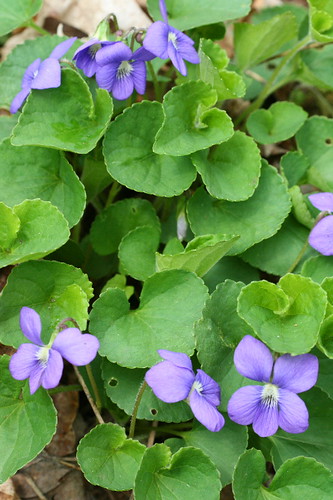
Tomorrow I am going with her to help her with an outdoor education class she’s running for a local group. We’re returning to the pond of yesterday’s post; while she has half the students at the pond studies part of things, I’ll take the rest down the trail to look at the forest ecosystem. I haven’t yet decided what to look at specifically, but will probably focus on wildflowers – eyecatching and pretty in a way many other things aren’t, to a group of non-naturalists. This selection are from our visit there last week. I do know the name of some of these, but not all. Surprisingly, my mom doesn’t have a wildflower guide (or it may be packed away), and I had the post all drafted up before realizing that. I will need to label these once I return home and can double-check them.

wildflowers2