Feeling birchy

White Birch, Eastern Cedar and White Pine

In the winter, from a distance, trees all tend to blend together in the landscape. The exceptions of course are the evergreens, whose colour stands out against the grays of the rest of the winter forest, and the birches, whose white bark sets them apart. In our area, our forest is predominantly oak and maple, but there are patches of birch here and there. Most of them are Paper Birch, Betula papyrifera, also known as Silver Birch, White Birch or sometimes Canoe Birch. There are 13 species of birch in North America. Several of them have names reflecting the colour of their bark: White, Silver, Red, Gray, Black, Yellow.

White Birch

It’s obvious to see where the name Paper Birch comes from. The bark peels and hangs in broad curls from the trunk of the tree. Virtually all birches have such papery bark, but of the species that occur here in the northeast, only the Paper Birch peels in such a way. The paper curls, compared to the bark of other trees, are extremely resistant to degradation and weathering because of a resinous oil contained within it. This same property also made it ideal for siding watercraft with, and the Native Americans used it often for their traditional birchbark canoes. It’s also used as a building material in many birds’ nests, including vireos; whether they choose it for its waterproofing properties or its pleasant perfume I don’t know…

The name Silver Birch is often used to refer to Betula papyrifera, but the name really belongs to a European species, B. pendula. This is funny, because I remember learning a Canadian folk song as a kid, sung in rounds over campfires, called “Land of the Silver Birch”:

Land of the silver birch, home of the beaver,
Where still the mighty moose wanders at will;
Blue lake and rocky shore,
I will return once more.
Boom-diddy-boom-boom, boom-diddy-boom-boom, Boom-diddy-boom-boom, bo-oo-oom

High on a rocky ledge I’ll build my wigwam,
Close by the water’s edge, silent and still;
Blue lake and rocky shore,
I will return once more.
Boom-diddy-boom-boom, boom-diddy-boom-boom, Boom-diddy-boom-boom, bo-oo-oom

My heart grows sick for thee here in the lowlands,
My heart cries out for thee, hills of the north;
Blue lake and rocky shore,
I will return once more.
Boom-diddy-boom-boom, boom-diddy-boom-boom, Boom-diddy-boom-boom, bo-oo-oom

Land of the silver birch, home of the beaver,
Where still the mighty moose wanders at will;
Blue lake and rocky shore,
I will return once more.
Boom-diddy-boom-boom, boom-diddy-boom-boom, Boom-diddy-boom-boom, bo-oo-oom

Yellow Birch and White Birch

Also in our area are Yellow Birch, Betula alleghaniensis. Their bark shines in the sunlight, and I think they would be more appropriately called Golden Birch. They show the characteristic birch curls, but they’re little, and narrow. You certainly would have trouble siding a canoe with them. Yellow Birch usually grow in damp soils, usually along the sides of creeks or vernal pools. They’re often found in association with Eastern Hemlock, which also prefer the same sort of conditions. Because of their habitat preferences, they’re found more locally and are less abundant than Paper Birch, which favour drier upland forest. Interestingly, apparently the twigs of Yellow Birch will, when scraped, produce a mild scent of wintergreen because of the methyl salicylate oil the tree produces, but I didn’t know this at the time I was out looking at the trees; I will have to check next time I go back.

White Birch and Yellow Birch

Birches tend to be pioneer species; that is, they are the first trees to move in to an area after significant disturbance such as fire or clearcutting. They are often found in stands of relatively even ages as a result, and will also die together as they reach the end of their lifespan. I have found a couple of spots in our forests where it seemed every single birch was dead or rotting, covered in bracket fungi. Paper Birch, and possibly Yellow Birch as well, provide an important food source to many animals that rely on the bark during lean winter months. Moose, in particular, feed heavily on birch bark in the winter, and White-tailed Deer, Snowshoe Hares and Porquepines will all nibble on the bark of trees of various ages. The green leaves are also eaten by deer, but not usually dried leaves. Birch are one of those trees that have marcescent leaves – they retain them through the winter – and one of the hypotheses for this is that it protects the young twigs from browsing by deer.

6256 - Archiearis infans - The Infant

Birches are host to the caterpillars of many species of lepidoptera and the larvae of other insects. One such species is the above, The Infant, Archiearis infans. These moths are daytime fliers and emerge in the early spring, often while there are still patches of snow on the ground. They seek out open, sunny spaces, and are usually found within or near to birch stands – not surprising, given that birch is their host plant. In areas with lots of birch they can be quite plentiful, but even in forests with sparser birch numbers they are still common. While out today I encountered 8 along a 1 km (0.6 mile) stretch of road. It’s possible you may not realize that what you’re looking at is a moth when you see it – often they spring up from the road before you get a good look at them, and in flight they just look like a small, orange, flighty butterfly.

6257 - Leucobrephos brephoides - Scarce Infant

This second one also favours birches as its host plant. It’s the Scarce Infant, Leucobrephos brephoides, related to the first above. As the name implies, this species is significantly less common than The Infant, and despite feeding on a widespread and common tree species, and found across much of northern North America, the moth species itself tends to be localized and rare. I was lucky to discover one along our road, resting in the middle of the dirt surface. I initially mistook it for the orange variety, and it was just sheer luck that I happened to get my butterfly net over it (which I’d taken along with me this walk, since I wanted some photos and it’s tricky to sneak up on these guys).

The March of moths

9929 - Pyreferra hesperidago - Mustard Sallow (2)

As of my last full post, I had got a total of 12 species to my blacklit sheet so far this year. The weather has been amazingly cooperative. Today the temperatures dipped into the single digits again, but prior to that we had five or six days of lovely, mild, sunny weather. Days of double-digit sunny afternoons were followed by (relatively) mild nights that encouraged the moths to fly well past dusk. Up to a dozen individuals would show up at my sheet most nights.

The addition of three more species last night brings my total up to 15 for the season thus far. Two species are “lifers”, meaning I’d never seen them before (this remains easy for me to accomplish because there are so many species out there and I haven’t been mothing all that long yet, this is only my second spring). The first of these was the above, Mustard Sallow, Pyreferra hesperidago. The sallows are a group of late fall and early spring species that are generally flat in profile often with fuzzyish torsos. They have a fairly distinctive shape, and in most they two spots on the wings are noticeable or well-defined. The Mustard Sallow shares the shape, but the spots are more subtle. Its defining characteristics are its rich orange colour and three roughly parallel lines.

9902 - Lithophane baileyi - Bailey's Pinion (2)

The other one was this species, Bailey’s Pinion, Lithophane baileyi. The pinions are another late fall-early spring species group. They tend to be long and narrow, often gray (though not always), often with at least one defined spot (though not all of them). Some have an attractive woodgrain pattern. They’ll often sit with their wings tight to their sides, which makes them hard to photograph compared to the sallows or other groups. I gather that Bailey’s Pinion, despite being found through much of the northeast, is not very common.

6658 - Phigalia titea - The Half-Wing

Many species that show up this early in the season spent the winter as an adult holed up in a nook somewhere. The warm weather and sunny days warms them up enough to encourage them to come out from where they’ve been hiding. Most such species are usually seen in the late fall, as well, after they’ve pupated but before they go into hibernation. Both of the previous species do this.

The above is strictly a spring species, however. The Half-wing, Phigalia titea, is one of the first species to emerge from pupae in the spring, and can often be seen in large numbers. Last spring, on a night with 50 moths, 18 were of this species. The Phigalias (of which there are two in our area, the other being the Small Phigalia, similar in pattern but only about 2/3rds the size of the Half-wing) that come to your light are all males; the females are flightless, and rarely seen. The Half-wing also has a dark morph that is nearly black with just a hint of stripes.

6662 - Paleacrita vernata - Spring Cankerworm

The Spring Cankerworm, Paleacrita vernata, was another species I was expecting. Closely related to the Phigalias, it’s very common in the spring, and like the Phigalias, has a wingless female. It also overwinters as a pupa, emerging with the warm weather. On that same 50-moth-night, nearly half of them were Spring Cankerworms. I like the subtle colours of this one, it has a sort of sleek look to it.

There’s something comforting in the familiar faces reemerging in the spring, like waiting for a friend you haven’t seen in ages. When they arrive, you’re delighted to see them, pleased that they made it. Of course, the conversation is a little wanting. But it’s a comfortable silence.

Spring in the air

spring

Yesterday was a gorgeous day. So warm that when I took Raven for her walk, I didn’t need my toque – note the bare ears in the photo! And bare hands – no mittens! And unzipped jacket. It was lovely. The day had started out overcast, but by the afternoon the sky had cleared and the sun shone brightly. There was a light breeze, but rather than nipping at your exposed skin like winter breezes usually do, this one caressed your face with soft, warm breaths of air. Oh, it was gorgeous. The sort of day where you just want to close your eyes and soak it in. I took Raven up the road to the abandoned property, where there were a couple of very old wooden chairs tucked at the edge of a clearing in the woods, where I could sit and do just that. The photo just can’t capture how beautiful the day was.

Today was lovely, too. Not quite as warm, so those delicious pockets of warm air weren’t present, but still mild and sunny, with the lingering scent of spring. Dan and I went up the road a little ways to hike around a parcel of crown land that Dan wanted to scout as a potential location for a new MAPS study site (MAPS – which stands for Monitoring Avian Productivity and Survivorship – is a banding program that helps give clues about the “why” to complement the “whether” species are declining that other studies, such as the Breeding Bird Survey, detect; through the use of banding the program helps to determine birth and death rates, as well as other important information on territories and dispersal). We hiked about two kilometers, returning to the Jeep with our feet soaked by the soft, melting snow that still covered much of the woods. But what a splendid afternoon.

spring2

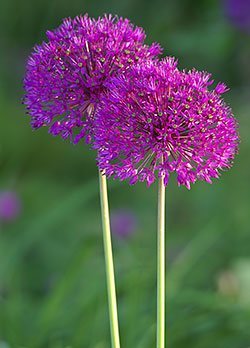
The sun and mild temperatures have melted the snow off my small little “garden”, the bit of earth that I cleared and planted with bulbs last October. I planted six types of bulbs: crocus, mini iris, scilla, allium, Nectaroscordum, and fritillaria. The latter three are all late spring bloomers, although the fritillaria might start blooming in late April. The other three, however, are all early spring bloomers. I did plant the bulbs in a particular arrangement last fall, but I can’t remember what went where now. There are shoots poking through the soft dirt already, encouraged by the warm sun and mild weather, but I don’t know who they belong to. I’m looking forward to their blooms!

9936 - Eupsilia morrisoni - Morrison's Sallow

And finally, the first moth of the season! I was standing outside last night, waiting for Raven to pee. Raven, however, was feeling a little freaked out by the barks of a dog a kilometer or so down the road echoing up the lake. When she gets like that, she won’t pee, despite much coaxing (she does know the command, and under ordinary circumstances will go right out and pee quickly and we can go inside again). So while I stood there waiting for her to gather her courage or whatever she was looking for, a moth flew in and started fluttering around our yard light! I quickly dashed inside to grab my insect net, and snagged it from up on the wall of the house. I suddenly didn’t feel so annoyed with Raven for taking her sweet time.

The moth was a Morrison’s Sallow, Eupsilia morrisoni. They are relatively common and widespread, and among the earliest to emerge in the spring, having spent the winter tucked into some crevice or nook as an adult moth. They will occasionally make appearances during the winter on exceptionally warm days/evenings. Although our temperature made it up to 12 C (54 F) during the day, by the time I was putting everyone to bed at midnight it had dropped to 2 C (36 F) again, and while I thought perhaps the warm sun might have roused somebody from their winter slumber, I had expected any moths to show up would be in the first hour or two after dusk, while it was still somewhat warm. I was quite surprised to see a moth out and about so late, after the temperature had dropped so much. I tucked it in the fridge overnight (it’s actually warmer in the fridge than it was outside, ironically) and took photos and released it this morning, setting it in the sun where it could warm up and then go off to find its own nook to crawl into again.

Future potential

Old Tent Caterpillar nest

Last spring I found a weird clump of insect eggs wrapped around a twig on a small tree at the research station. I discovered what it was while looking for something else on BugGuide.net. It turned out it was a bunch of tent caterpillar eggs. So knowing what they look like, this winter I’ve kept my eyes open to see if I could spot any prior to them setting up shop in their little tents.

Eastern Tent Caterpillars prefer trees in the family Rosaceae. This includes the cherries (Black Cherry, Chokecherry), as well as hawthorn, crabapple and apple trees. Those are the species I most often see their nests on. The closely related Forest Tent Caterpillar opts for oaks and maples. For both species, theirs are the web nests you see in the spring; webs later in the summer and fall belong to another species, usually the Fall Webworm.

Old Tent Caterpillar egg case

I had checked out the apple trees on the property down the road I often vist, but hadn’t noticed any egg clusters. Yesterday I took Raven back there for the first time in ages, since the snow started to melt (before it was quite a trudge in there, with snow up to your shins). Walking down the path I passed by a small sapling with the remains of a nest in it. I’m not sure how I’d managed to miss it on all my previous visits; looking elsewhere, I guess. In any case, I paused here to check for eggs.

I didn’t find any new egg clusters, but I did find what was left of last year’s. I could tell they were old because the eggs were all open, their tops popped off when the little baby caterpillars left last spring. Or possibly even the spring before, I don’t know how long these egg masses last. There were four such clusters on this small little tree – it was evidently hard-hit last year, but spared this year.

Old Tent Caterpillar nest

A bit further up the path was an older tree, much larger, with a branch that hung down low to eye level beside the path. On said branch was another old nest. Interestingly, this one had some shed caterpillar skins still clinging to it. As the caterpillars grow, they shed their old skins and leave them behind, often trapped in the layers of their web. At the end of the summer you can sometimes find nests with the old skins inside, but I was a bit surprised to still find them there this late in the winter.

New Tent Caterpillar egg case

It was here on this tree that I found some new egg clusters. They’re very distinctive, with a hard, shiny shellac to them that smooths over the egg surfaces and protects them from the elements. I’m not sure what the shellac is made of, but I presume the little caterpillars have to chew their way out after leaving the eggs. The whole cluster is no more than an inch long (2.5 cm), but wraps nearly completely around the branch. It’s possible for there to be up to 200-300 eggs crammed into that small mass.

Old and new Tent Caterpillar egg cases

This tree had a few egg clusters from last year (obviously, as they would’ve hatched out the inhabitants of the old nest in the tree), as well as the ones from this year. It looked, at least from the ones I found, that there were more eggs this year than last on this tree. On one branch, I found a new egg mass less than an inch from last year’s old one, an interesting juxtaposition of the past and the future.

It’s funny how the tents can take you completely by surprise come spring, like they came out of nowhere. And yet, they were there all along, hidden on the branches in plain sight. I’ll have to remember to watch for these guys when they hatch out and start building their webs in late April.

Mothing for the greater good

moth164

I love citizen science projects. I try to participate in the ones that I’m able, when I can, and if I remember (not always a given if I’m busy). The phrase citizen science refers to projects that rely on the input of volunteer participants to collect the data, usually from the comfort of their own homes or local region. Such projects have a long history – for instance, the Christmas Bird Count is effectively a citizen science project that dates back to the early 1900s. Other bird projects that rely on citizen science are the Great Backyard Bird Count and Project Feederwatch, and the data organization website eBird is entirely a citizen science undertaking.

There are other similar projects that deal with other organisms or ecosystems as a whole, as well. There are versions of the Christmas Bird Count for both butterflies and dragonflies. The development of the blogging community has added a twist to citizen science, in that bloggers are encouraged to participate in particular projects and then write about their experience. Examples might be the Blogger Bio Blitz or International Rock-flipping Day. These projects go a long way toward developing databases and expanding our knowledge about various species.

Map of moth checklists

I have been working a bit recently on the maps for the moth field guide. I’ve been learning GIS software so that I can use that to plot the maps. One of the things I did this morning was sit down and map all of the locations for which I currently have data. Last year I had solicited checklists and data from the contributors to Moth Photographers Group, with the intention of compiling these resources to map ranges for the moths in the book. This field guide will be the first to offer range maps for species in the region the book covers, which we’re excited about.

However, key to making good range maps is having data. Although I got a lot of great lists from the MPG photographers, when I plotted them on a map they still left considerable gaps in coverage and data. Even some of the couple dozen points that are shown actually only have less than a couple dozen species for that point, the result of a moth’er’s visit to a friend’s place, or while on a trip.

moth163

So as I sat there figuring out where the additional data would come from, and then why there isn’t much data in the first place, my thoughts began to form themselves into an idea. Why not create a citizen science project for moths? I could almost guarantee that I’m not the only one looking for good data, and the information collected from such a project would have far-reaching applications.

And so this afternoon I sat down and created the North American Moths Backyard Inventory project, NAMBI for short. I really hope that NAMBI will become as popular as other blogger initiatives I’ve participated in and/or know about. It’s easy, it’s fun, and it has the potential to make some great discoveries, since there’s so little known about moths and so few people paying attention to them relative to other groups of organisms. Examples would be Wanderin’ Weeta’s Shy Cosmet record, a provincial first, or Roundtop Ruminations’ Black Witch discovery, a county first and state second. Chances are these moths have occurred in these regions before, possibly quite regularly in the case of the Cosmet – just no one’s been out looking.

I invite all my readers to join in over the course of this year and submit their moth observations to NAMBI. Participating is easy. There’s no set date, weekend or week. Participate as often or as infrequently as you like. Simply check your back porch light, set up a sheet and blacklight, or put out a light trap or sugar goop if you want. Invite some friends over and make a social event of it, or enjoy the peace and quiet by yourself. Set up in your backyard, go down the street to your neighbourhood nature patch, or see what you get while you’re out camping. How you go about it is completely up to you!

I intend for the NAMBI blog to be open to all participants (although I think I have to add you as an author first), and I really hope that folks will start contributing their photos and stories to create a dynamic website. I have also created a NAMBI Flickr Group where people can share their photos (both of moths and moth’ers), get identifications, and ask questions and share anecdotes in the group’s discussion boards.

Sure, I stand to benefit tremendously from the data contributed to the project, and my motivation for starting it was partially driven by selfish reasons. However, I think that this is something that has a much broader application than simply some range maps for a book, just the way that eBird is being used for science projects and research on birds. Not to mention that I think people will really have fun mothing once they’ve tried it…

And of course, spread the word! Encourage others to participate, put a banner up on your blog. As the saying goes – the more the merrier!