Nestbox tidy-up

Jack helping with nestbox clean-out

Last week we had a string of really warm days. I took advantage of one of these gorgeous, sunny afternoons to take the power drill and the puppy and walk back through our fields to clean out the nestboxes of last year’s nests. (Raven came along too, but declined to help.) I’d done the same thing last year, at nearly exactly the same date. It really does take the nice spring weather to motivate me to go out and take care of the task, even though there isn’t really any reason I couldn’t do it earlier in the winter, or even in the fall.

I visited nine nestboxes, though we have twelve officially on our 30 acres: one of them I just plain forgot about, but the other two are in serious need of repair (or better yet, replacement) and I declared them out of commission for this season. The boxes are all, with the exception of two, ones that were already here when we moved in. In fact, they look like they’ve been here for many years already, weathered and covered in lichen as most of them are. It doesn’t seem to put the birds off, though, and until such time as I can get my spare cash and spare time to coincide, we’ll probably just make do with these.
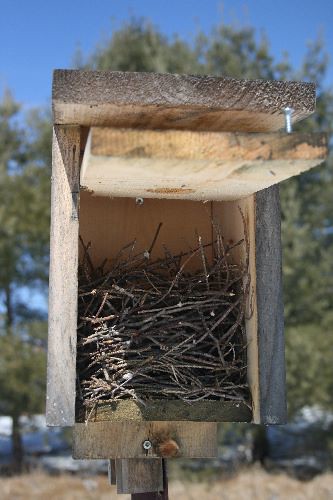
House Wren nest

The first one I opened is the above. It’s one that Dan put up for me halfway through the summer on a stake at the corner of my veggie garden. Being in a (relatively) high-traffic area, plus absent at the start of the season, it came as little surprise that the box’s inaugural residents were House Wrens. I love these little brown birds, so full of spunk and cheer. Growing up we never had them around our house. It wasn’t till I was in university and won a nestbox somewhere, and gave it to my parents to erect near their house, that we had our first wren move in. I don’t think they’ve been without one in their garden since, and the only year that I missed having one was the spring we were at the lake house. (We probably could have got one there, too, but simply didn’t have any boxes up.)

House Wren nest

Box number three: another wren. (I’m going to take these out of order, because it tells a better narrative.) Wrens build very distinctive nests. They like for their cup to be at or just below the level of the entrance hole, so in deep boxes this means filling the box up with something. Their material of choice is coarse twigs. And they stuff the box with them. Sometimes they’re so tightly wedged in that you have to wrestle with it to get it out again, and when the material does come out, it almost invariably retains its cube shape. (The odd one falls apart. Must be a young bird: still learning.) Only at the very top, and usually tucked against the back wall, is there anything other than twigs: their small concave nest is woven with fine grasses.

House Wren nest

Box number eight: a third wren. Surprisingly, there were only three wren-rented boxes among the group. I seem to have neglected to include the tally in last year’s post, but I think there were five, and our available rental accommodations didn’t include the veggie garden box at the time which, if not included in this year’s tally, leaves only two. There were definitely more, anyway. Possibly a couple of those from last year were re-nestings, second broods from later in the year, and so there really were the same number of wren pairs this year as last. Also, at least one wren moved up to by the house, where there weren’t any boxes last year. I find it interesting how the resident of a box isn’t necessarily the same from one year to the next.

Tree Swallow nest

Box number seven. This is a good example of that. Last year when I cleaned out this box the previous summer’s resident had been a chickadee. I was really hoping that the chickadees would reuse it this year, since I had heard a male persistently hanging around that area and singing. If they tried, though, then they were evicted before they could get building. Last summer’s tenants were Tree Swallows. They build shallow nests of thin dried grass, and almost invariably include one or more white or mostly-white feathers. The white feathers here are a giveaway, though I also remember there being nearly-fledged young in this box when Dan and I checked it late last summer.

Tree Swallow nest

Box number five: this one also fledged Tree Swallows last summer. But they were some messy swallows. In the previous nest, the nest structure, including the fluffy feathers, is still mostly preserved. In this one, there’s so much packed poop that the stop was just a solid crusty layer. Eeew. I’ve seen this in the occasional swallow box, and I’m not sure why some get like this and some don’t. Perhaps in boxes like this, the nestlings reach fledging age (which also happens to be the age when the parents stop removing the fecal sacs) just as the weather turns cold and rainy for a stretch, so they spend a few days stuck in the box before leaving?

Eastern Bluebird nest

Box number four belonged to one of our Eastern Bluebird pairs. This one also raised a full brood of chicks to fledging, which we got to see when we checked the boxes last summer. I sometimes have trouble telling the bluebird nests apart from the tree swallows, but the bluebirds are generally frugal with their feather use in comparison, and often make deeper nests – two or three inches of grass instead of just one or so.

Eastern Bluebird nest

Box number six: our other bluebird box. I was surprised and delighted to discover we had two bluebird nests on the property, since the previous year we’d just seemed to have the one. We found this one later in the season with eggs, which led me to believe it might be a second nesting. As with the previous nest, this one has a couple of inches of dry grass forming the base.

Eastern Bluebird nest

But the clincher was the blue-green eggs; as a member of the thrush family (same as robins), their eggs are robin-egg blue. It was by these that we knew for sure who was using the box last summer. Unfortunately, the eggs never hatched. Being a later nesting, with eggs at mid-June, I wonder if it simply got too hot for them and they died. There were four when we checked last year, but only three when I opened the box up last week. At some point, one of the eggs had been broken open; by whom, I don’t know. It would be difficult for any land vertebrate to get up to the box because the post has a wide baffle on it, and there aren’t any trees or shrubs nearby. We don’t have cowbirds or House Sparrows in the area that I might consider as possible culprits, either. Also, the other three remain intact. It’s a mystery.
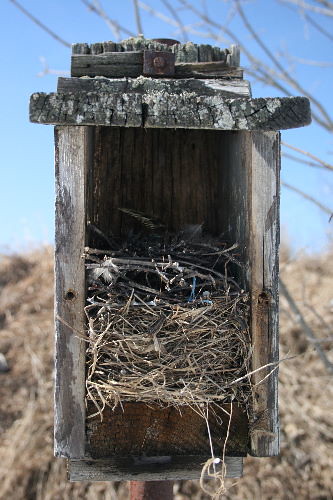
Wren nest atop abandoned bluebird nest

Box number two had two residents last year. The top material is pretty obviously the work of a wren, while the bottom stuff looks to be from a bluebird. Bluebirds seem to be fairly non-confrontational tenants and don’t put up much of a fight when someone with a sharp tongue and quick beak (like wrens or House Sparrows) decide they want the space for themselves. This seems to have been what happened last year. When we opened this box up last June, the wrens had already moved in and had half-grown babies.

Wren nest atop abandoned bluebird nest

And box number nine seemed to be the same. The poor bluebirds seemed to have gotten shunted around a bit before they were able to settle into one at last. I don’t know if there’s anything you can do to keep wrens from ousting the bluebirds once the bluebirds have picked a box. Perhaps all you can really do is put up more boxes, so there are more options for everyone.

Snow print

Saw-whet owl? print

One of the hardest things to photograph is a track or print in the snow. All the same colour, with virtually no contrast. But I did my best with this one, tweaking it a bit in Photoshop to help bring out the details.

Dan found this near the tractor shed while out with Raven a couple of days ago, before we got flooded with rain. The area is at the edge of the fields that surround our house, in a narrow strip of deciduous woods that separates our property from that of our neighbours.

It was obviously made by a bird, most likely swooping down to the ground to pounce on something, although I’ve seen marks like this made by startled grouse that pop up from the ground to take off. There weren’t any tracks leading up to it, though, and it wasn’t close enough to cover for it to have been a grouse asleep in a snow hollow.

The size of it (see next photo) and these circumstances led Dan and I to believe this print was made by a Northern Saw-whet Owl. These little owls are chunky birds, their bodies roughly the length and breadth of your flat palm. They’ve got relatively stubby wings, short and broad. And they typically forage from a low perch, pouncing on prey that’s traveling on or underneath the snow.

Saw-whet owl? print

Lending strength to our hypothesis is the fact that on a couple of nights just recently we’ve heard a saw-whet calling from the woods bordering our property. While it’s possible that the calling individual might be one that’s passing through, there are patches of ideal habitat on the neighbouring land, and saw-whets were recorded breeding in the region during the most recent bird atlas. Saw-whets, like most owls, are also early breeders, though not quite as early as some of our local species, such as the Great Horned. Saw-whets would be starting to court now, and find and establish nest sites. Eggs will likely be laid in three to four weeks.

Though these little owls will take a variety of small vertebrates as prey, their primary food item is voles. We have no shortage of voles around here, which like the wide meadow habitat. When food is plentiful, saw-whets may catch more than they need and cache some instead of eating it immediately. When they’re ready to return to it, they thaw it out by holding it in their feet on a branch and sitting on it, tucking it into their belly feathers like they would do with an egg they were brooding.

A pretty neat find! We’ll keep our ears open in the evenings to see if we can determine where the bird has set up a territory, if it is indeed breeding here, and then in a few weeks try to locate its nest cavity.

Sunday Snapshots: New puppy!

puppy6

We brought him home this afternoon! He was a real star on the drive home: he only cried for about 10 minutes before settling down in the cat carrier I was transporting him in. He slept for most of the 2.5 hour trip.

Raven wasn’t sure what to make of the boisterous new addition (it might take her a bit to make up her mind). The two older cats disappeared upstairs; Ollie kept a careful eye on him from halfway up the stairs, while Merlin thought it safer to wait things out in the bedroom. Charlie, who has never had any fear of dogs, was quick to say hello and start making friends. The puppy, meanwhile, was interested in everyone.

No name yet – it’s taken us a while in the past to settle on something that fit well, and I can’t imagine this little guy will be any different. :)

And if anyone is still interested in any of the puppy-fundraiser drawings (you can see what’s left at the post here), I’d be happy to hear from you!

puppy9

puppy8

puppy1

puppy4

puppy3

puppy7

puppy10

puppy2

puppy5

Puppy fundraiser

Yellow-rumped (Myrtle) Warbler - 7x6"- Niagara Birds - SOLD

We’re getting a puppy! For the last year or perhaps even longer, Dan and I have discussed getting a friend for Raven. While we lived at the lake house there was a beagle down the road who would occasionally come by, and the two of them got along famously. However, she has little opportunity to see other dogs now; the only one in the neighbourhood that we see much of Raven is ambivalent at best towards, and most of the time our walks don’t take us down the road anyway (we’ve got plenty of our own land we can roam, where I can let Raven off-leash). Perth has no dog park, and the nearest one is nearly an hour away. When she meets other dogs now it almost seems like she’s forgetting the language. We thought that adopting another dog would not only give Raven someone to socialize with, but would also give her a friend for company during the hours Dan and I are working and to play with when we go outside.

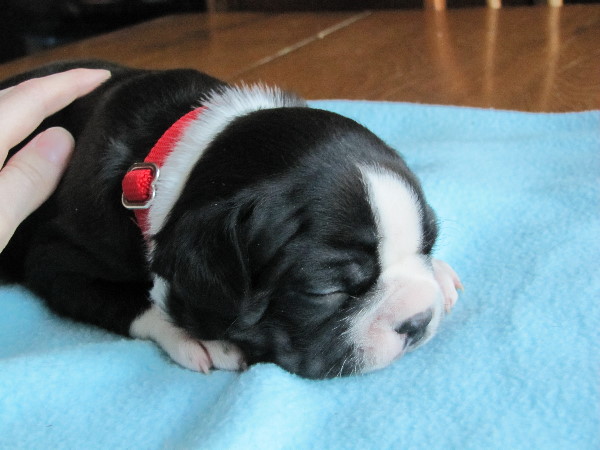
Four weeks old here - isn't he sweet?

After considering the temperaments and traits of various medium-sized breeds, we settled on Boston Terrier as being hopefully the best match for Raven, and when a litter came up for sale not too far from us we put our name down for one. I went to met them last week. The little boy above will be coming home three weeks from now. It will probably take us a lot longer than that to settle on a name.

As anyone who’s adopted a dog knows, there are a lot of expenses that come with it. Besides the adoption price, there are also toys and accessories if you don’t already have them, shots and neutering/spaying if they haven’t already been done, and of course puppy food. Fortunately, we do have most of the dog accessories because we have Raven. To help out with the other costs, I’ve decided it’d be a good time to clear out some old artwork I have.

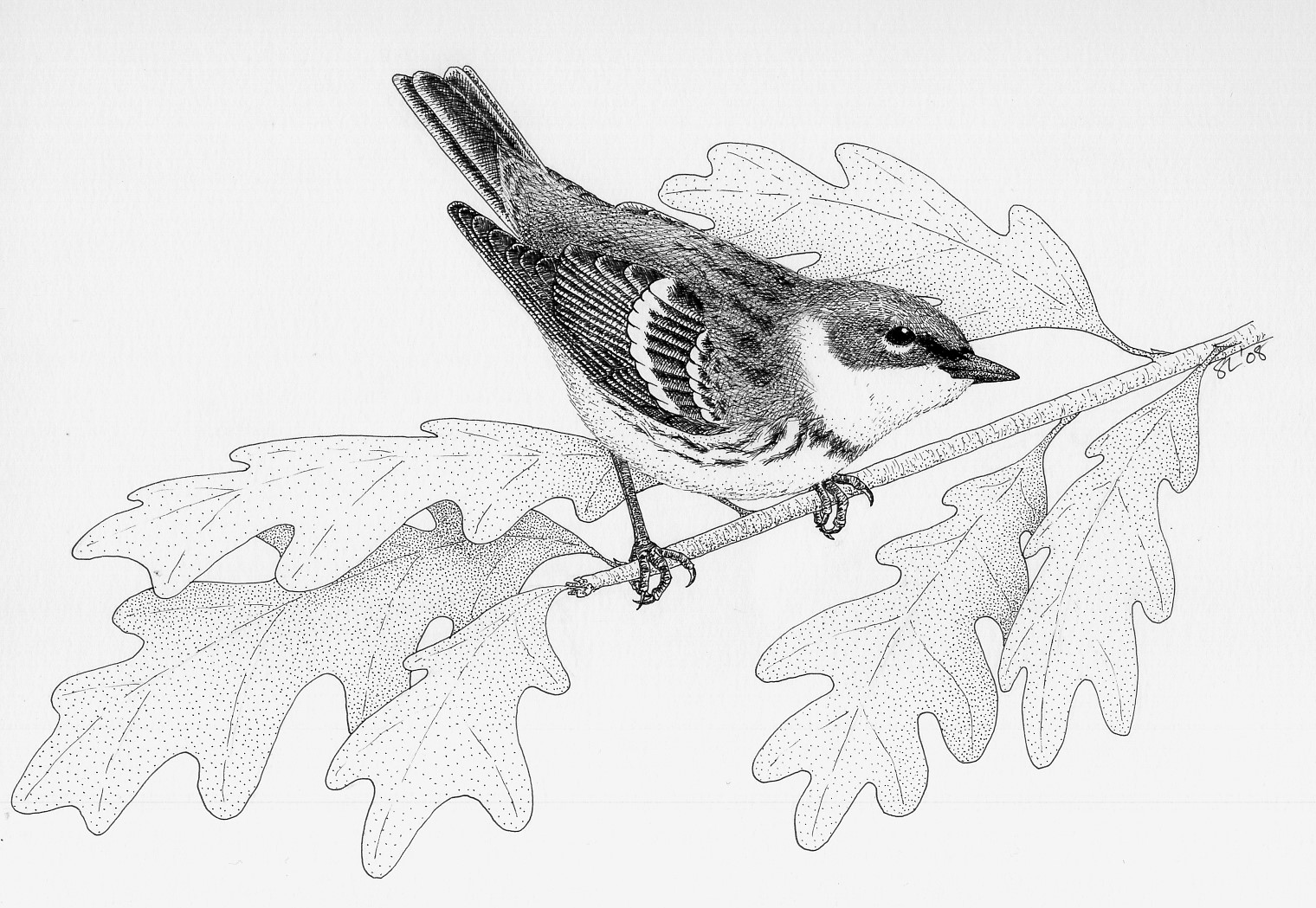
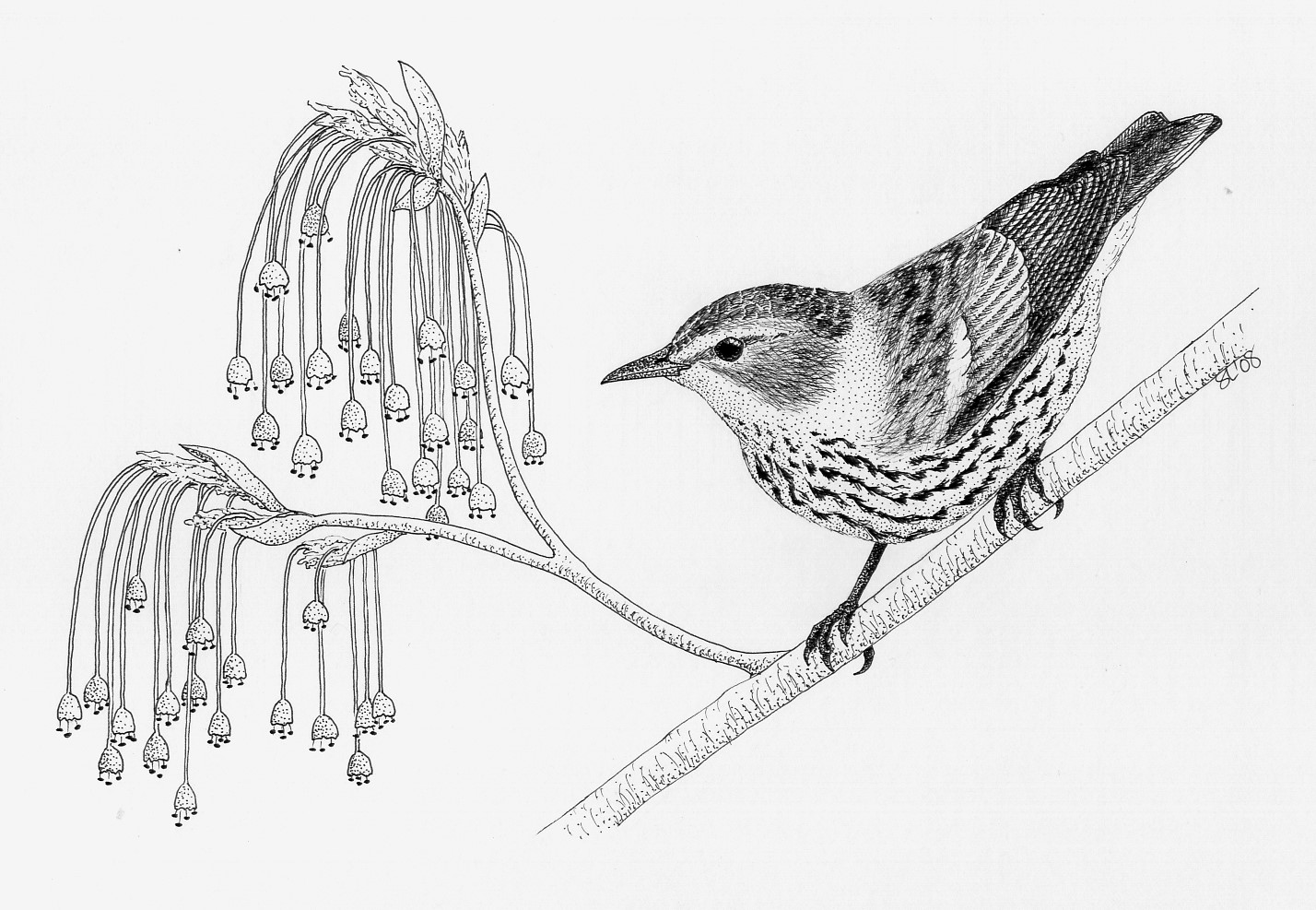
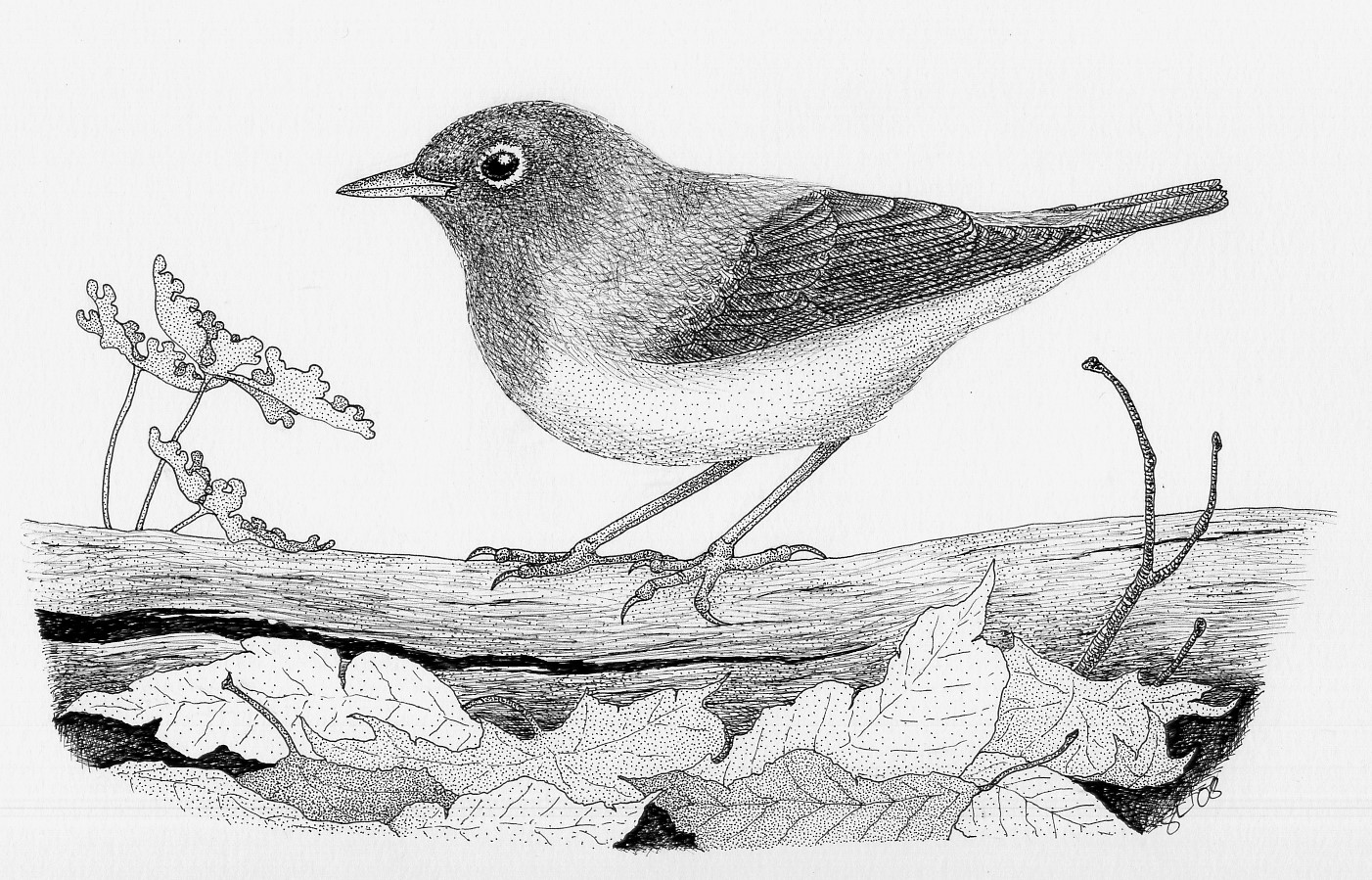
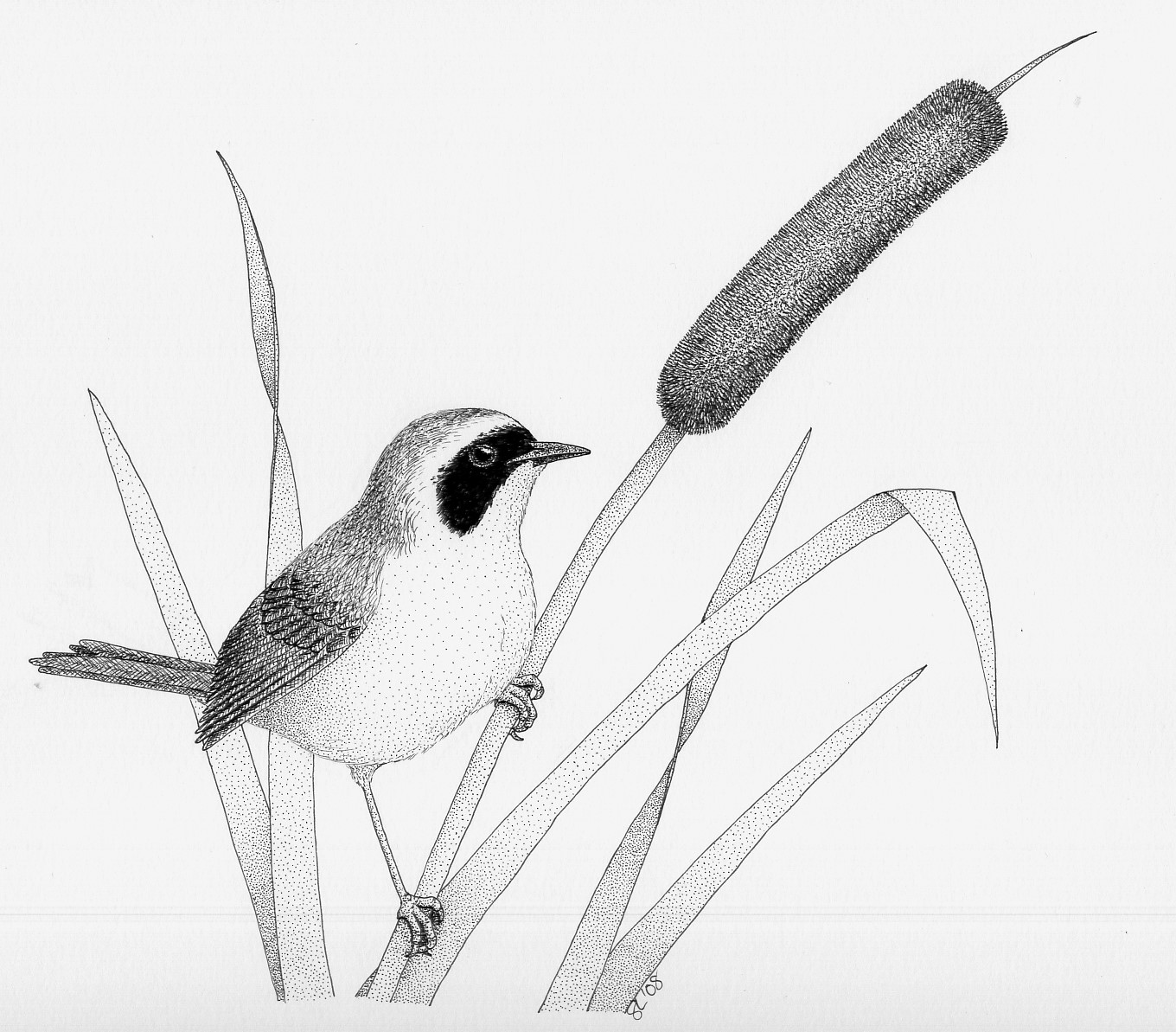
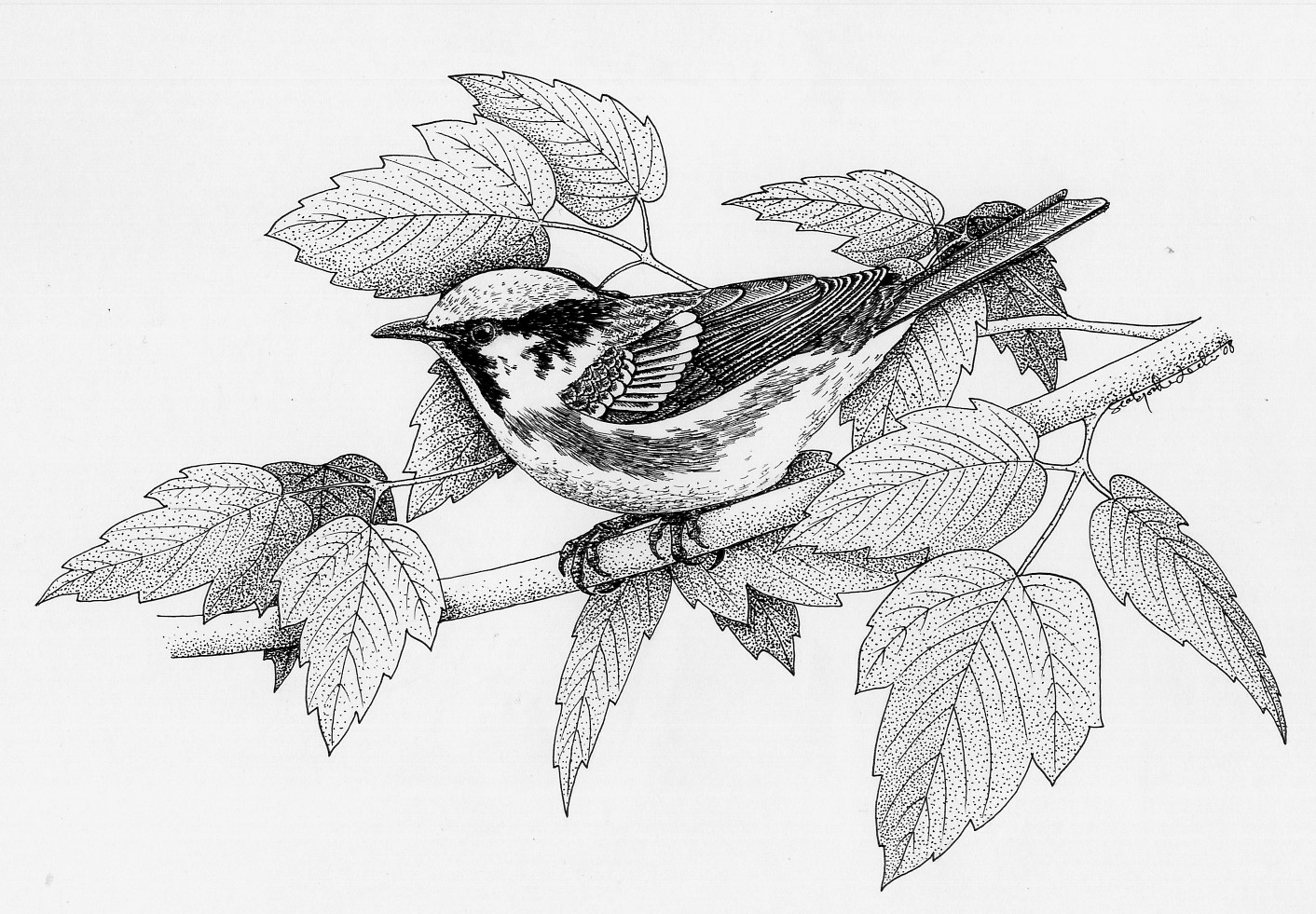
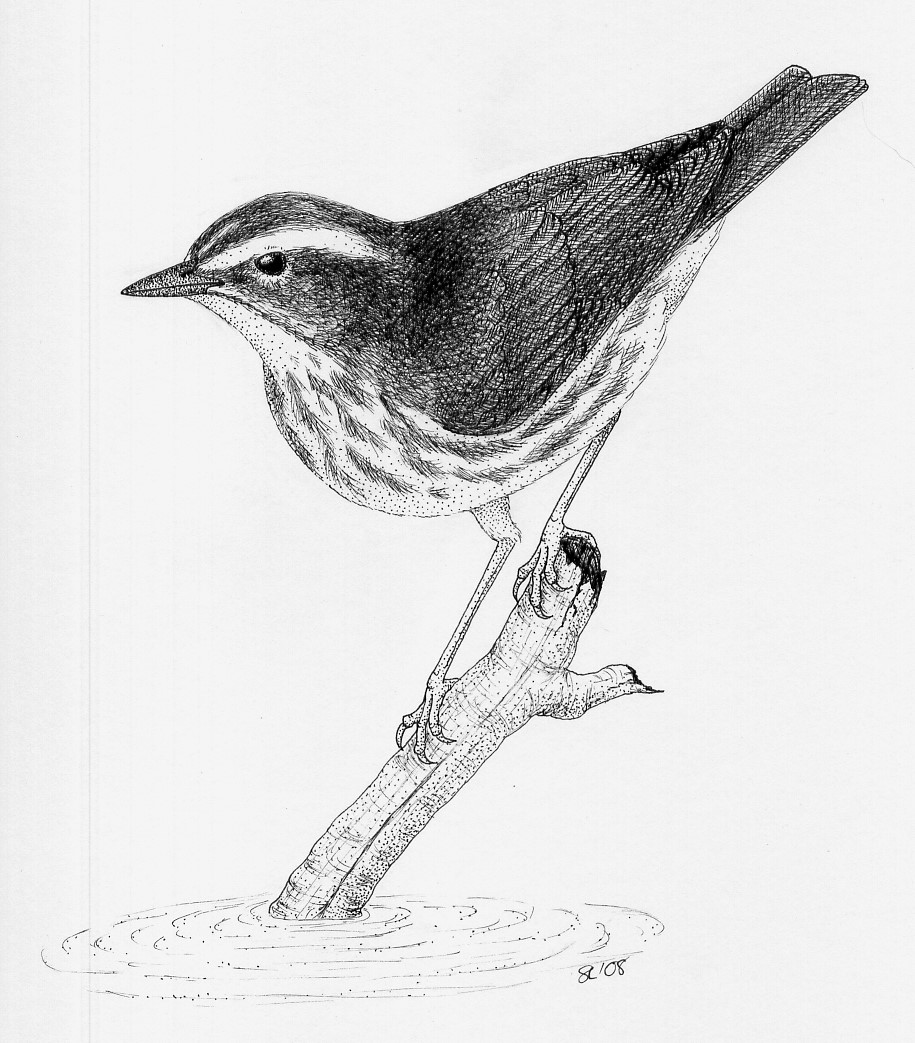
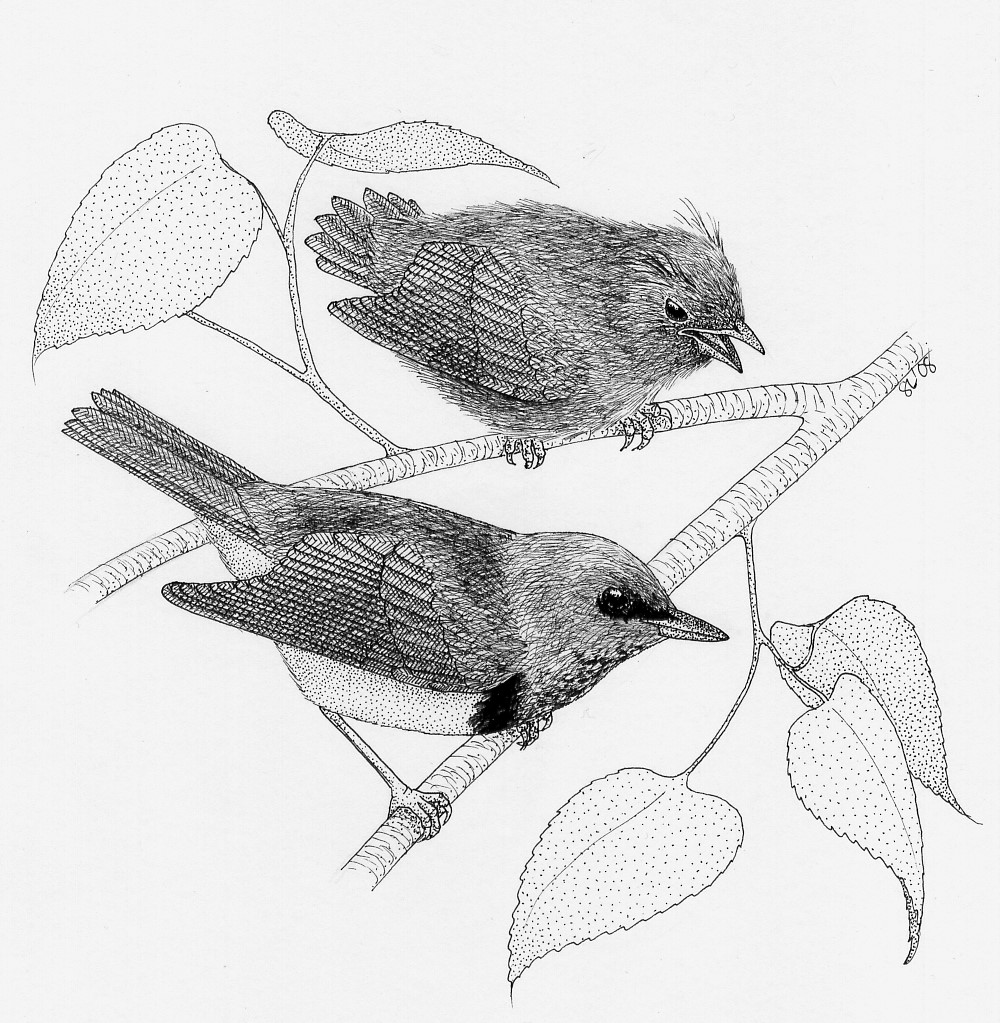
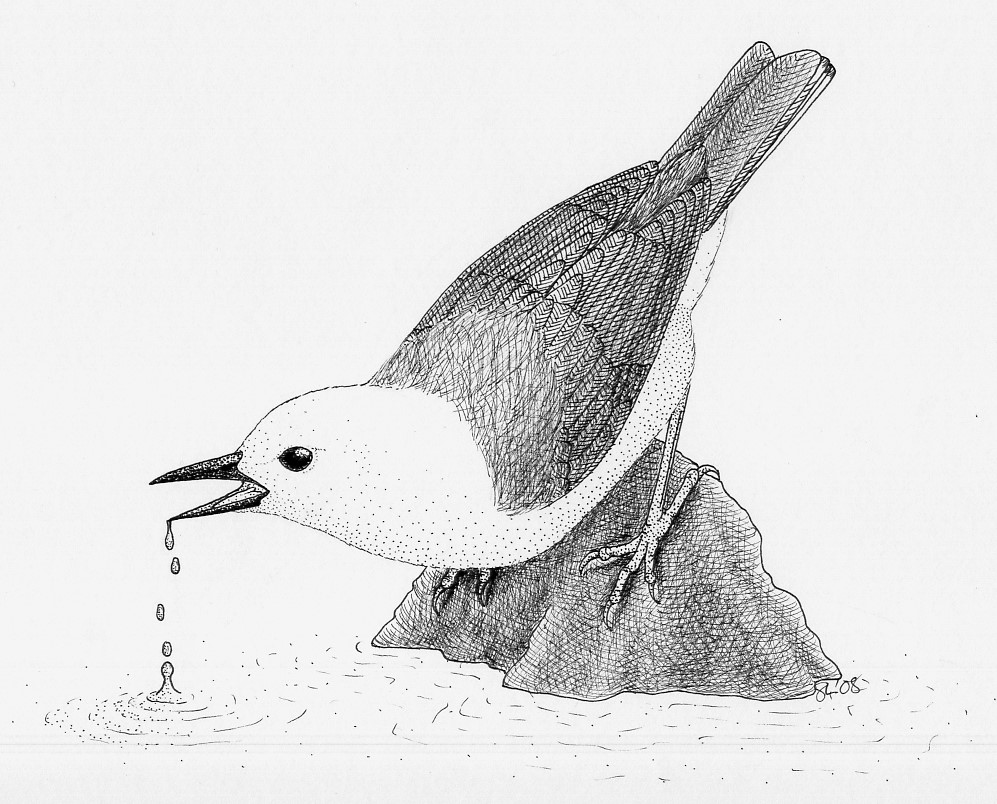
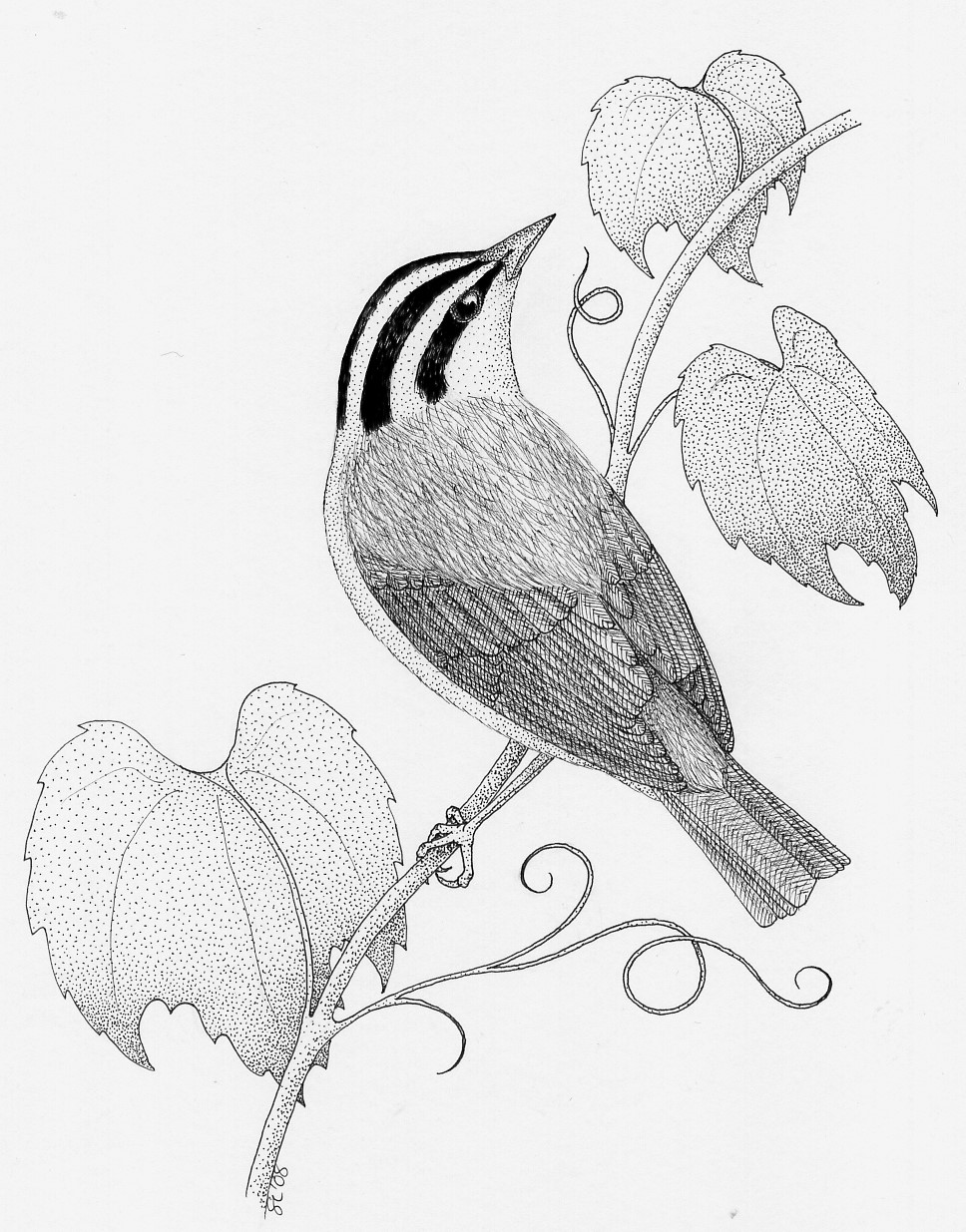
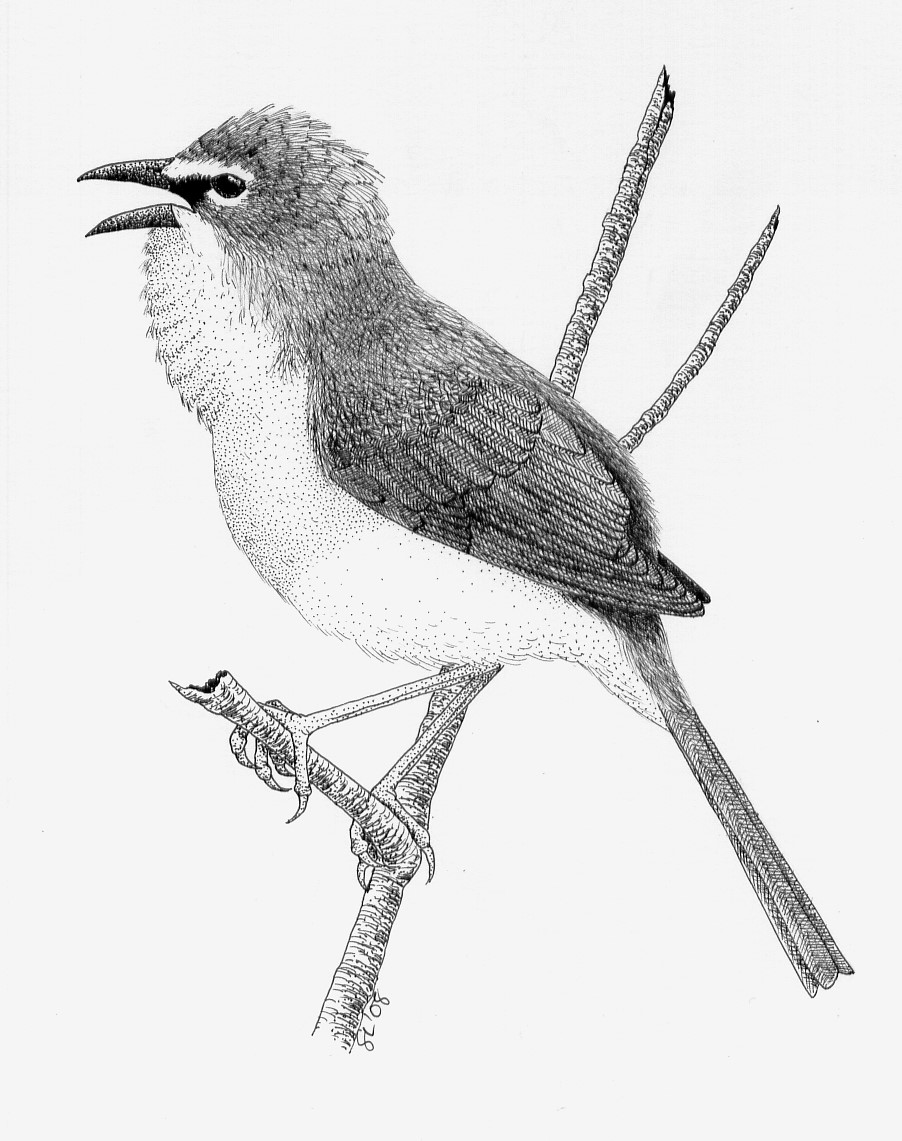
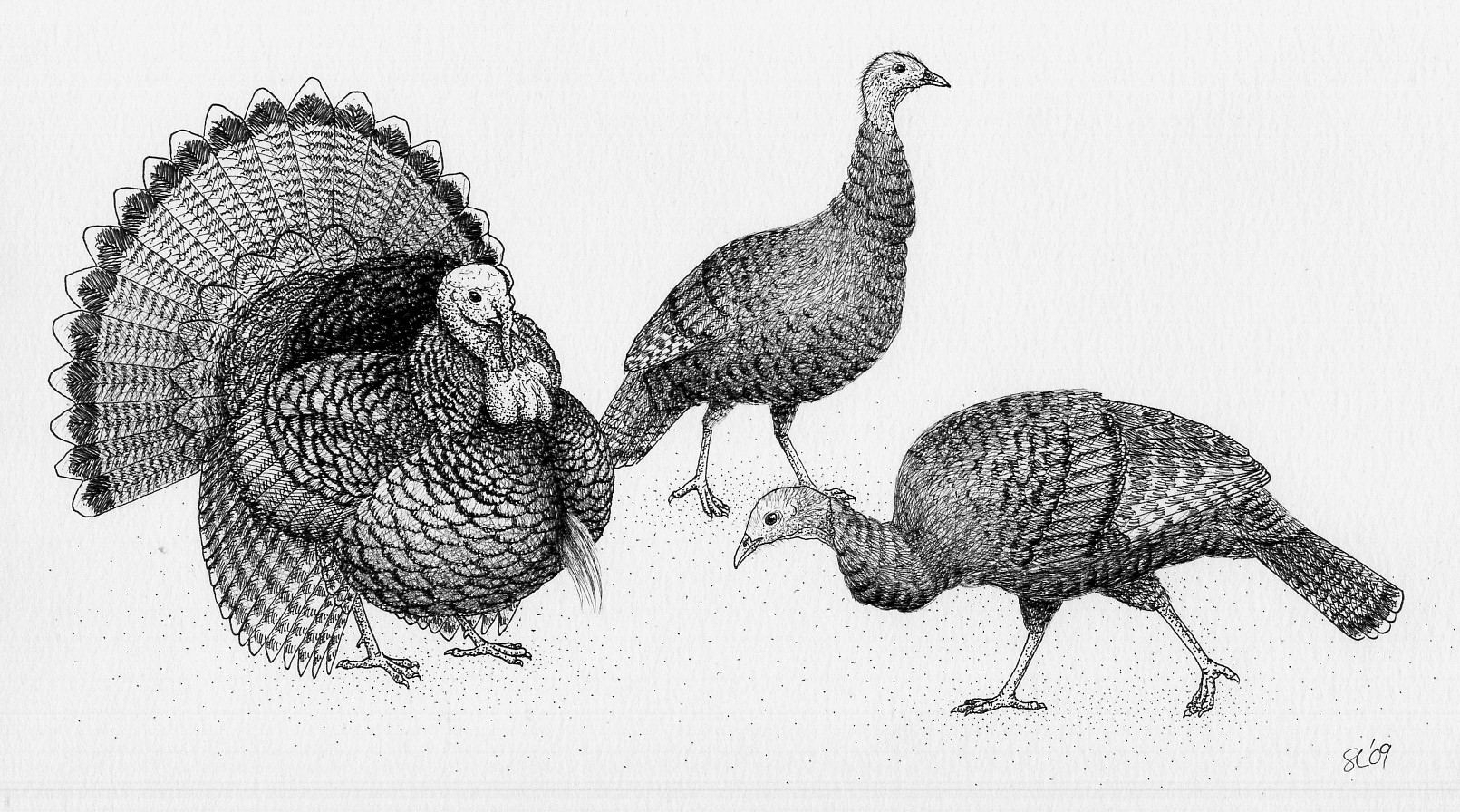
These are drawings I did in 2008 for the now-published book Niagara Birds by John Black and Kayo Roy. At the time they were planning on illustrating all of the accounts with black-and-white artwork, I suppose because the cost to print b&w was less than that for colour, and they had a tight budget. They asked me to draw all of the warblers of Ontario, plus the turkeys (the latter based on a sketch I included in an electronic Christmas card that they liked). Final tally was 38 drawings. Then sometime during the manuscript preparation process they decided to go with colour photographs for most of the accounts instead – I’m not sure if they were having trouble finding enough artists, or realized the cost for colour wasn’t as much as they were expecting, or some other reason. In any case, fewer than half of my drawings ultimately got used. The original plan had been for the book launch to also be an art show of all the contributing artists’ works, but given that the book was mostly photographs, that didn’t happen either.

So long story short, I’ve got 36 drawings that have been sitting in my portfolio for the last couple of years (I already sold two to friends – can you figure out which species?). They are all light-resistant, waterproof ink on acid-free paper (meaning they won’t fade or yellow). The paper dimensions are 9×12 inches, but the actual drawings vary depending on the image – measurements given in the caption as WxH. These are all original, not reproductions. Each one represents about 6-8 hours of work.

I’m offering these at the fire-sale price of 1 for $40, 2 for $60, 3 for $80, or 4 for $100. Etc. Price includes shipping/postage. If you are interested in buying any, leave a comment here or email me (canadianowlet AT gmail.com) saying which ones you’d like.

The ones that were included in the book are indicated below the image. Two drawings (Northern Waterthrush and Yellow-throated Warbler) are favourites of mine that I’d like to reserve for myself, but would consider selling at actual value for an 8-hour work ($120). Larger versions of all drawings can be viewed by clicking on the image.

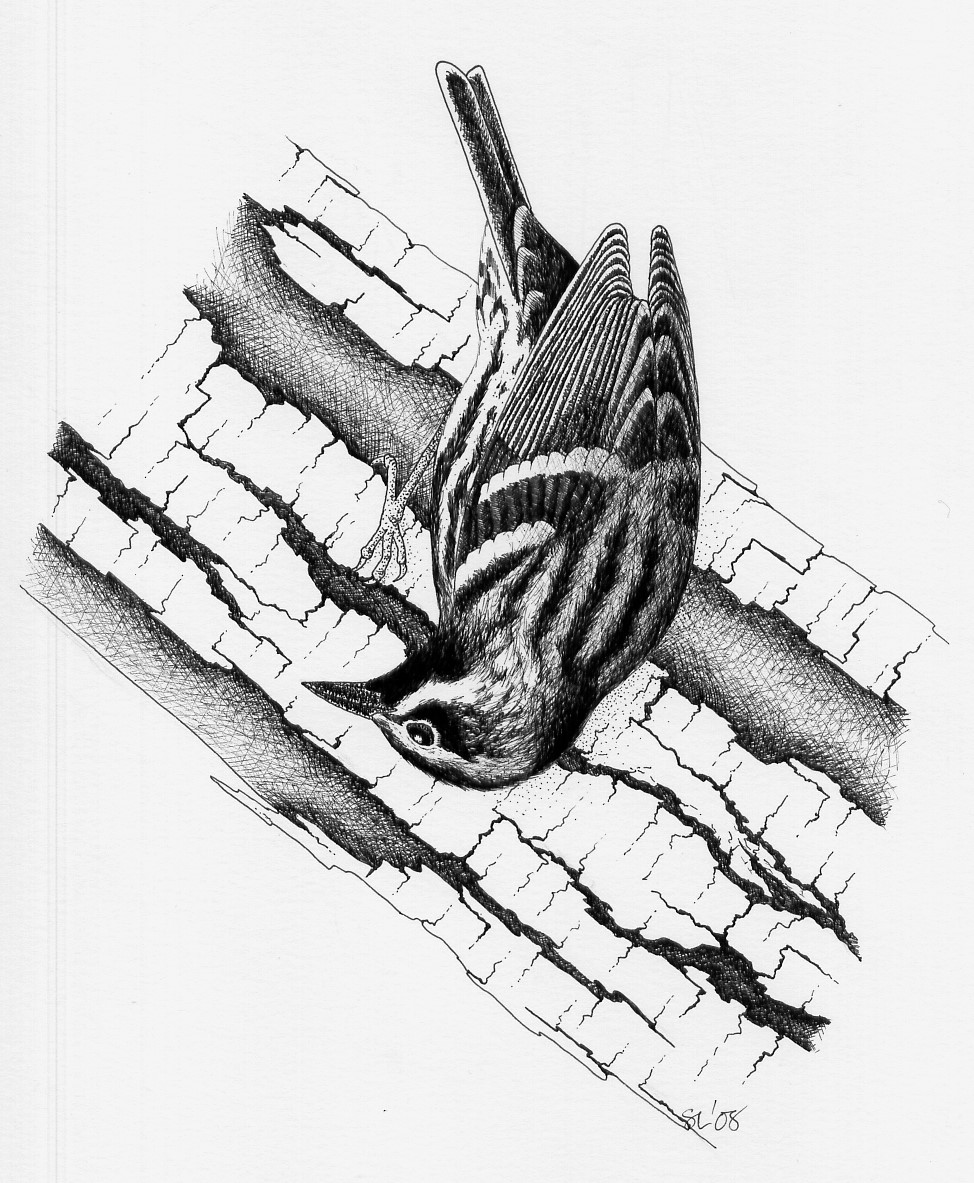
Black-and-white Warbler
Black-and-white Warbler - 6x7"
Bay-breasted Warbler - 6x6" - SOLD
Blackburnian Warbler - 6x7" - SOLD
Black-throated Blue Warbler - 9x6"
Black-throated Green Warbler - 9x7" - SOLD
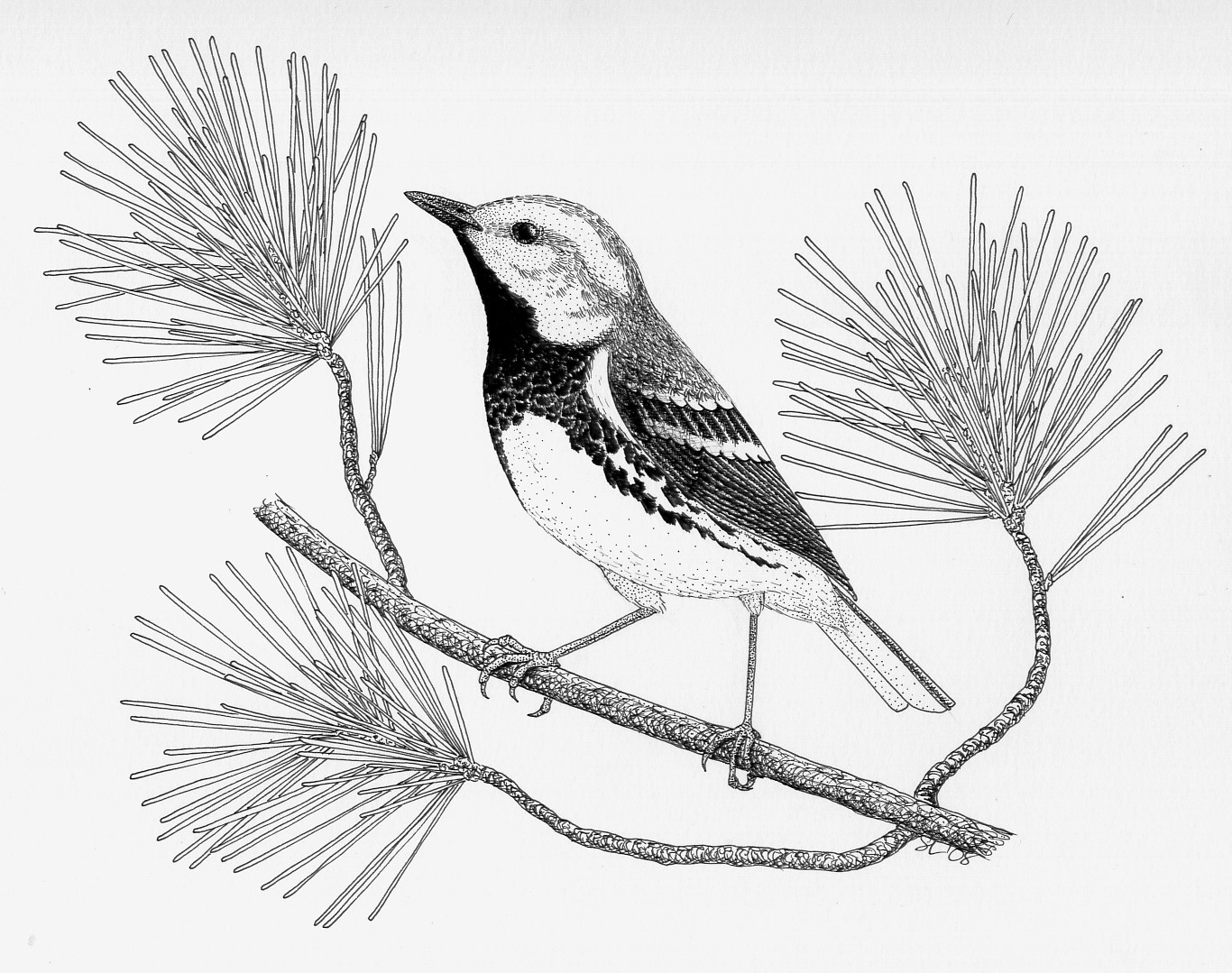
Black-throated Gray Warbler - 7x6"- Niagara Birds
Blue-winged Warbler - 7x6"
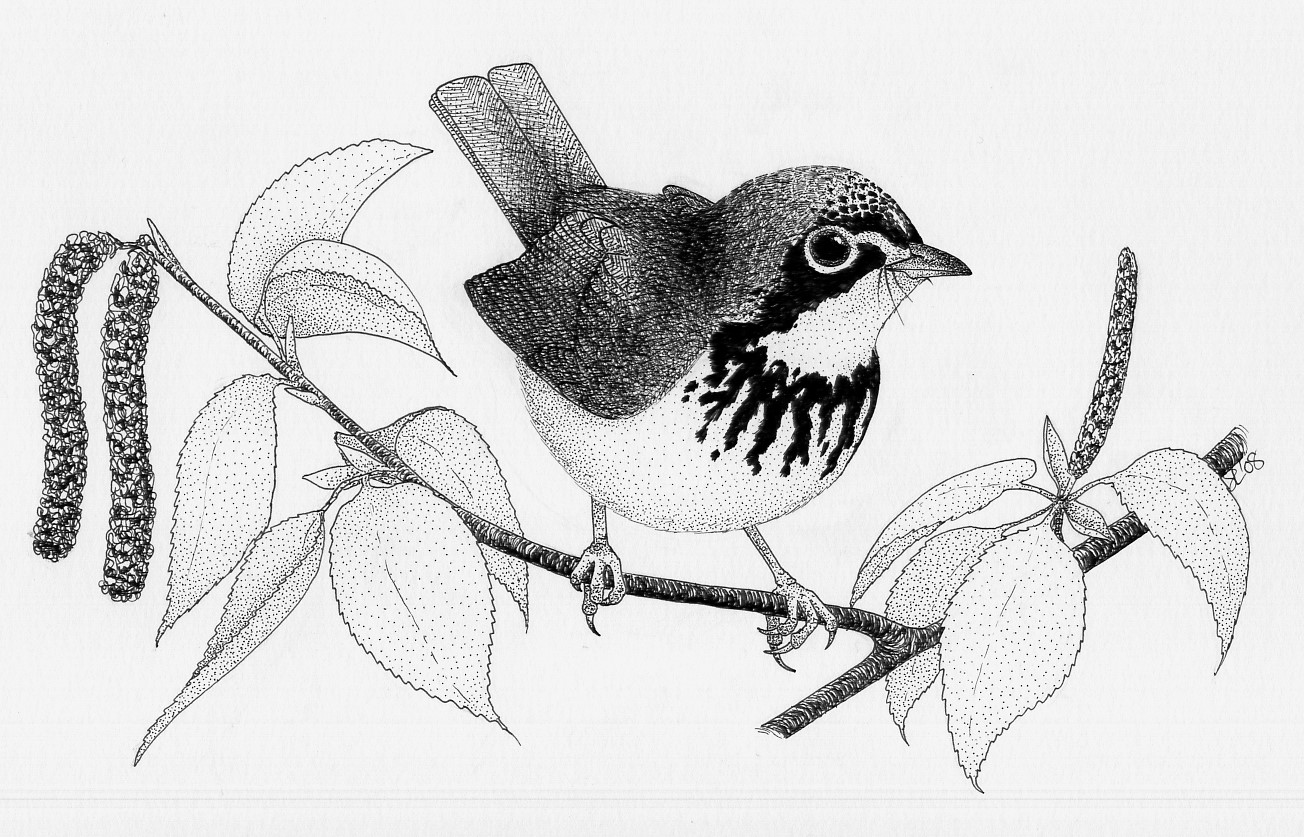
Canada Warbler - 8x5" - Niagara Birds - SOLD
Cerulean Warbler - 9.5x6.5" - SOLD
Cape May Warbler - 9x6" - SOLD
Connecticut Warbler - 9x5" - SOLD
Common Yellowthroat - 8x8" - SOLD
Chestnut-sided Warbler - 9x6" - SOLD
Golden-winged Warbler - 6x8" - SOLD
Hooded Warbler - 8x6" - Niagara Birds - SOLD
Kentucky Warbler - 7x5" - Niagara Birds
Louisiana Waterthrush - 6x7" - SOLD
Magnolia Warbler - 6x6" - SOLD
Mourning Warbler - 7x6"
Nashville Warbler - 5.5x6"- Niagara Birds - SOLD
Northern Parula - 8x6" - SOLD
Northern Waterthrush - 9x5.5" - Niagara Birds - RESERVED
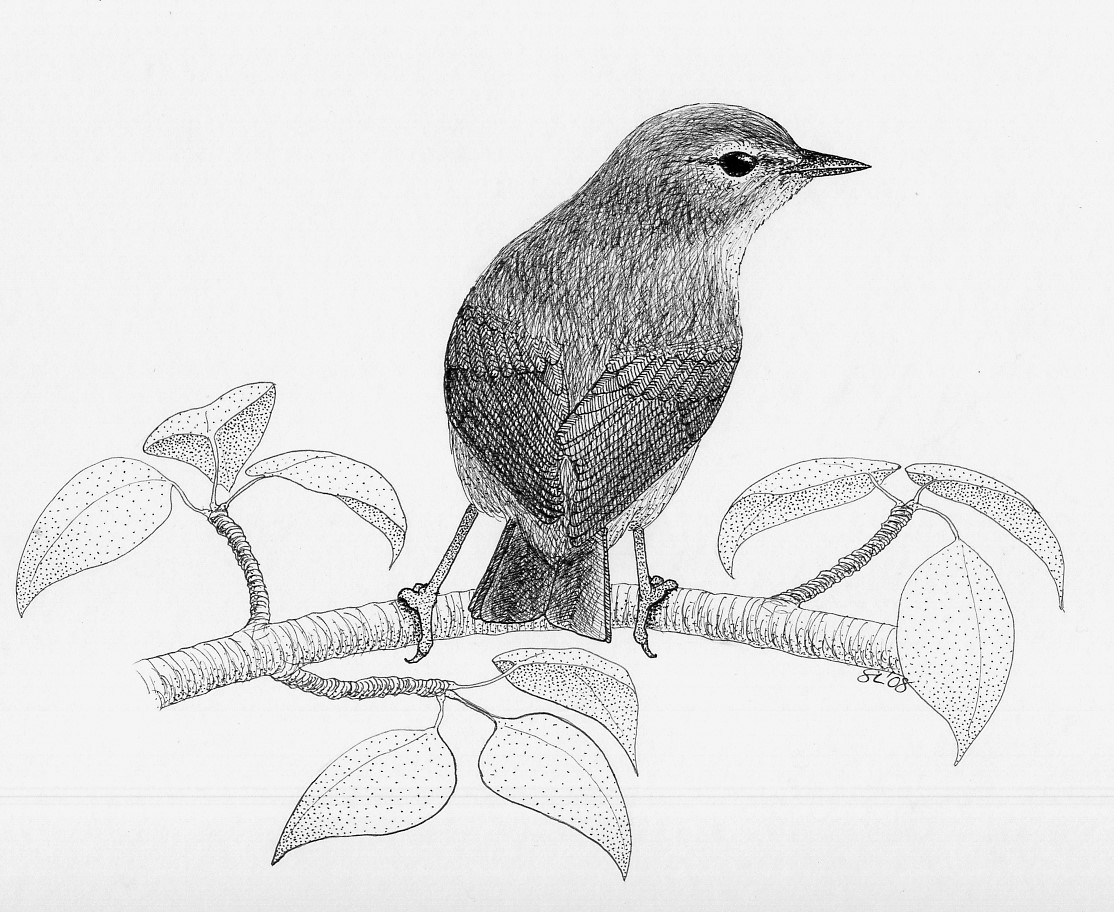
Orange-crowned Warbler - 7x5.5"
Ovenbird - 6x5"
Pine Warbler - 6x7"
Prairie Warbler - 7x7" - Niagara Birds - SOLD
Prothonotary Warbler - 6x5" - Niagara Birds
Tennessee Warbler - 8.5x6" - Niagara Birds
Worm-eating Warbler - 6x8" - SOLD
Wilson's Warbler - 8x5.5" - SOLD
Western Palm Warbler - 7x4.5" - Niagara Birds
Yellow-breasted Chat - 6x7" - Niagara Birds
Yellow-throated Warbler - 6x7" - Niagara Birds - RESERVED
Yellow Warbler - 5x9" - SOLD
Wild Turkey - 10x5.5"

Seabrooke’s Bookshelf – Christmas books

my bookshelf

Books have been a Christmas tradition in our family. Both of my parents have been big readers for as long as I can remember. My mom taught all of us kids to read before we even started school so that we could get a head start on diving in to these fabulous worlds ourselves. We “earned” our allowance through reading lists, lists of books that we were to read and report back to Mom on. Surprisingly, we never cheated (or at least I never did) – either we were too honest, or we rarely found it a chore (I can’t remember what my pre-teen self thought of it, but I’m banking on the latter). Books and reading have continued to be a big part of my life, though my favoured genres may shift back and forth from one year to the next. And for at least the last dozen years or so, Christmas has always meant at least a few new books to read, some ones that were asked for, some that the recipient might not yet know.

This year I got three books I asked for, and two that I didn’t but am looking forward to reading. I’ve already finished one book: Prairie Spring by Pete Dunne. I first heard about this series from my literary agent who handled the moth guide; he also represented this book (actually this series; there’ll be one for each season once they’re all out). My curiosity was piqued by his description of the project, but in the intervening time between then and when it was published it slipped my mind. I was reminded of it by a book review over at The Well-read Naturalist, and promptly put it on my wishlist.
The best literary non-fiction, in my mind, maintains a casual and engaging voice, usually employing a good deal of travelogue or personal experience interspersed with the background and supporting information. Some authors are okay at this, but there are some authors who are really good. This is the first book I’ve read of Pete Dunne’s, but he clearly falls into this category. I didn’t find this a dry read at all, as can happen sometimes with non-fiction, and could easily sit down for an hour or two at a time with it.

In this book he and his wife, Linda, load up their RV and trek off to the American prairies for a couple of months to watch winter slowly give way to spring. Their trip, and the book, is roughly defined by four experiences: Sandhill Cranes on the Platte River, Lesser Prairie-Chickens in New Mexico, Bison in South Dakota, and the network of National Grasslands. Around these he talks about the history of the prairies and the unique human culture there. Never having read any of his other works, I can’t say how this one compares, but I certainly enjoyed it and will have to pick up the next installment, Bayshore Summer.

Dunne’s easy writing style and combination of personal narrative and information reminded me of the works of one of my favourite natural history writers, Scott Weidensaul. The first book I got of Weidensaul’s was Living on the Wind (discussing migratory birds), a Christmas gift received perhaps approaching ten years ago, when I was in university. I devoured that book, if I recall, and was delighted when I discovered he had a new one out, The Ghost with Trembling Wings (which talks about birds and extinction). That one was also a Christmas gift. And then a few years later again, I received Return to Wild America, in which he traces the route that Roger Tory Peterson took some decades earlier in the book Wild America, to see how things have changed.

I think this last is perhaps my favourite of the five of his books I own. The book opens in Newfoundland, which was also the starting point of RTP’s trip with his traveling companion and friend James Fisher. He then approximately traces their route around the outer edge of the continent: south to Florida, west across Texas, north up the Pacific coast, ending in Alaska. I haven’t read the original Wild America that this book commemorates, but Weidensaul provides enough information that you don’t need to have in order to appreciate and enjoy what he writes. While the RTP original focuses primarily on the nature, Weidensaul notes the nature but spends more time discussing the conservation of it: the threats that have or are working on eroding what RTP observed, and the efforts and successes that have been undertaken to save it. Unfortunately, there’s more than a book’s worth of such circumstances on our continent today. Weidensaul is able to present it all with a hopeful outlook, though, and the book remains upbeat despite the sometimes depressing stories that come out of revisiting nature sites fifty years later.

Weidensaul’s published on average every three years. His most recent book, Of a Feather, came out in 2007. I haven’t heard of any new books forthcoming, but I hope he’s not done writing.

Edit: I was delighted to receive, this morning, an email from Scott Weidensaul himself assuring me that he was still alive and hard at work on his next project. The book looks at the colonial history of North America through the mid-1700s; a departure from his usual natural history subjects, but promising to be just as interesting! It’s scheduled to be out fall/winter 2011.

And time for one more. Another author whom I’d place in the same category as Pete Dunne and Scott Weidensaul is David Quammen. I was introduced to Quammen’s work back in university as well, when I borrowed my mom’s copy of Song of the Dodo (discussing evolution and extinction as it relates to island biogeography). Although it was many yeas ago now that I read it and I can only remember fragments of the book, it still remains one of my favourite non-fiction works. Some day I must find the time to re-read it…

A couple of Christmases ago I received his book Monster of God, which talks about the so-called man-eating beasts and humanity’s uneasy relationship with them. He travels to visit the home regions of lions, tigers, Carpathian brown bears, and crocodiles, and combines his modern-day observations and experiences with the history of the appreciation and persecution of each group of animals, and the people who have to live with them. It’s a fascinating account and well-written, highlighting some surprising facts about animals that are shrouded in myth.

He followed this up with a biography of Charles Darwin which came out in 2006 but which I haven’t yet read (I find personal biographies less interesting, usually, than natural history biographies). Like with Weidensaul, I haven’t heard anything about forthcoming books, but I hope he’s plans to write more.

.

Beyond simply highlighting a few Christmas favourites, I didn’t bother going into too much detail with the reviews here because you can get all of that and more from the Amazon pages, if you’re interested:

Prairie Spring – 5 stars
Return to Wild America – 5 stars
Monster of God – 4.5 stars